
On this page
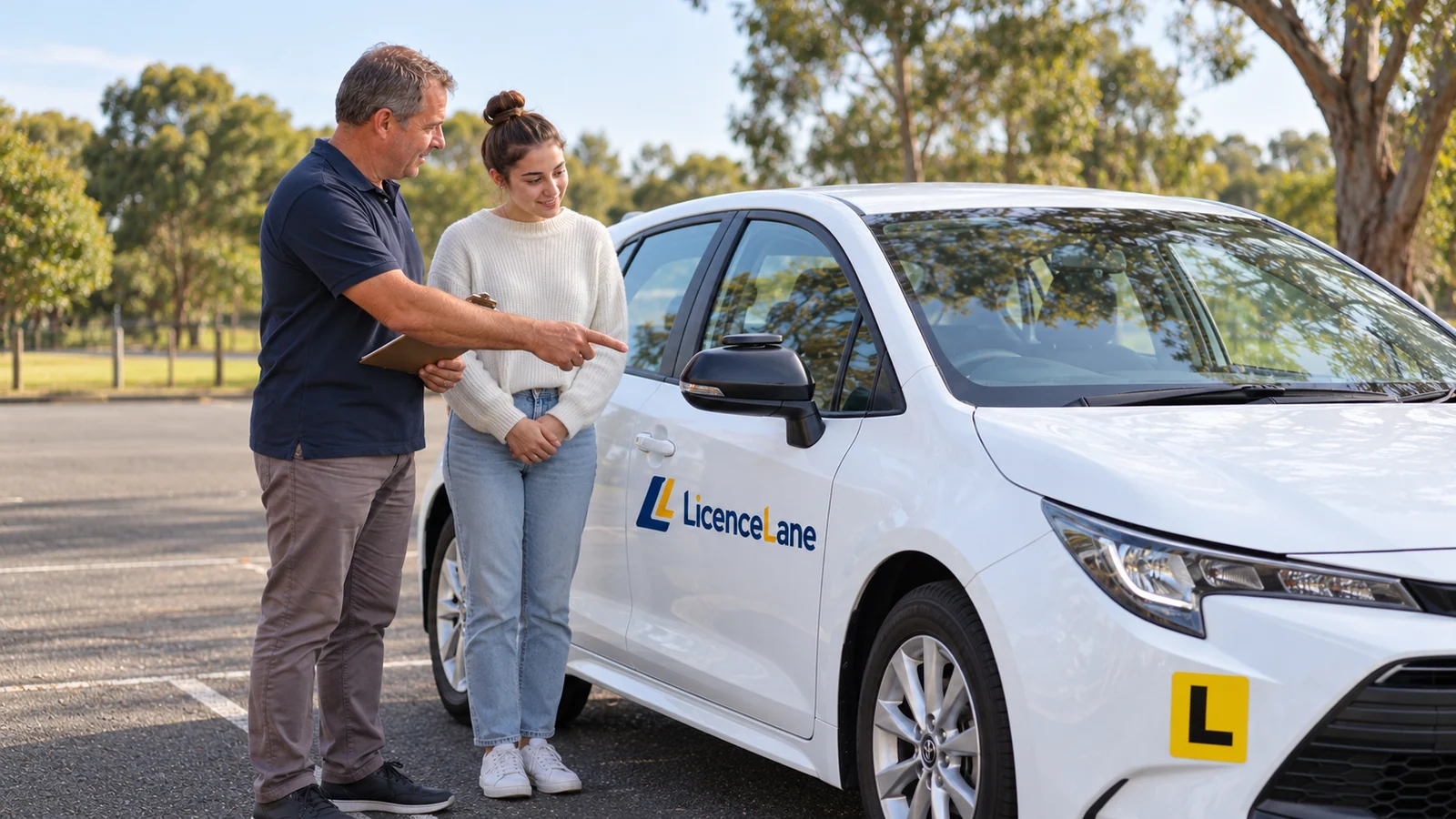
ACT learners can progress towards a provisional car licence through Competency Based Training and Assessment, or through a one-off government practical assessment. These options organise the assessment differently, but both require you to meet the applicable learner-licence, driving-hours and hazard-perception requirements.
Choosing a route early helps you understand what an instructor is providing. Ordinary tuition, accredited competency assessment and support for a government test are different services. A booking should identify which of those you are buying.
Check the requirements that apply to both routes
The ordinary ACT pathway requires a minimum age of 17 for a provisional licence. The learner holding period is normally 12 months, reduced to six months for someone who was 25 or older when the learner licence was issued.
The usual supervised requirements are 100 hours including 10 at night for the younger issue-age category, or 50 hours including five at night for the older category. Complete the Hazard Perception Test and keep the required evidence of hours and any approved credits.
Check unusual circumstances with Access Canberra, including an interstate history, overseas licence or interruption to the learner period. The route used by a first-time ACT learner may not apply unchanged to a conversion applicant. Neither assessment option allows a private provider to waive government eligibility requirements.
Understand the competency based route
Competency Based Training and Assessment is often called CBT&A or the logbook method. An ACT Accredited Driving Instructor assesses your performance against 23 competencies over the course of the process. Successful completion removes the need for a separate government practical assessment under this route.
Access Canberra says at least seven lessons are required for the logbook method. That minimum is not a guarantee that everyone will finish in seven sessions. The provider must assess the required performance, and you still need the applicable supervised hours and Hazard Perception Test.
Ask how training, assessment and feedback are arranged. You should understand what has been completed, what remains and how further sessions will be charged. Keep the signed records and any certificates needed for your application.
Check the instructor holds the required accreditation
ACT accreditation matters for competency assessment and the instructor-hour credit scheme. Do not assume ordinary paid tuition includes either service. Ask the provider to confirm their relevant accreditation and the specific work included in your booking.
An instructor may help you prepare for a government assessment without providing CBT&A. Conversely, a CBT&A provider may organise a staged process that does not resemble a single test-day package. Compare services by what they actually deliver rather than by similar marketing labels.
If you change instructors, discuss your existing records and how the new provider will review them. Confirm the arrangements before paying for more sessions. A booking platform cannot independently validate or sign off an assessed competency on the provider's behalf.
Understand the one off government assessment
The alternative is an assessment with an ACT Government Licence Examiner. Follow Access Canberra's booking instructions for your circumstances and keep the confirmed date, location and reference. Overseas applicants may need a different booking process from ordinary ACT learner-licence holders.
You provide a suitable vehicle for the assessment. Any preparation lesson or instructor-car arrangement needs to match the government appointment, including travel and the required arrival time. Confirm the whole period for which the car is available.
Prepare to make decisions independently. Ask your instructor for a practice drive with limited prompts and a detailed discussion afterwards. Use the feedback to decide which tasks need more work, rather than relying on a prediction about the examiner or route.
Check the vehicle carefully
Access Canberra publishes specific assessment-vehicle requirements. They include registration, cleanliness, roadworthiness, working seatbelts and a centre-mounted parking brake accessible from the front passenger seat. The stated requirement allows an electric or manual handbrake that meets the criteria.
Read the full checklist, including visibility and any relevant vehicle recall requirements. A rule you have seen on a Victorian test page may be different from the ACT rule. Check the actual car and appointment arrangement, not just a general description of an instructor vehicle.
Become familiar with the seating position and controls before the assessment. If a substitute vehicle is offered, confirm suitability again and allow preparation time. A last-minute change should not leave you uncertain about essential controls or the transmission being assessed.
Prepare the documents and timetable
Follow the current appointment checklist. It includes your licence, completed learning records where required, any requested certificates and the documents specific to your application. Bring corrective lenses if required for driving.
Access Canberra asks you to arrive 15 minutes early. Its published information says being more than five minutes late can require rebooking and another payment. Plan travel with enough margin to reach the correct location without rushing.
If your instructor meets you somewhere else, save that address separately. Confirm the preparation start time, journey to the assessment and arrangements afterwards. The government appointment time does not describe the whole period needed for a private support service.
Compare costs and change arrangements
For CBT&A, ask how individual sessions, assessment tasks and any additional work are priced. For a government assessment, distinguish the official charge from preparation lessons and vehicle support. Compare the complete payable amount and the services included.
Read the government or authorised provider's change and cancellation rules directly. They may differ from the terms of an ordinary lesson booking. If one appointment changes, contact the other provider rather than assuming their calendar or payment is automatically updated.
Keep confirmation of any agreed changes and the records of services completed. This helps you organise the next step and resolve a disagreement about inclusions without relying on memory.
Complete the provisional licence process
After satisfying the assessment route, follow Access Canberra's instructions for licence issue. Present the required records and pay any applicable charge. Read the conditions of the licence issued, including automatic-transmission and provisional restrictions.
If more assessment or practice is required, use the feedback to plan the next session. An overseas applicant who does not pass must check the separate conversion rules before driving or rebooking; the consequences can differ from those for an existing ACT learner.
LicenceLane lets you compare independent ACT instructors and book the services shown as available. Verify accreditation before expecting CBT&A sign-off, and confirm the exact inclusions of any government-test support listing. LicenceLane does not conduct government assessments or issue driver licences, and a private booking does not guarantee the assessment outcome.
Official sources
Official pages checked on . The authority's page prevails over this guide.