
On this page
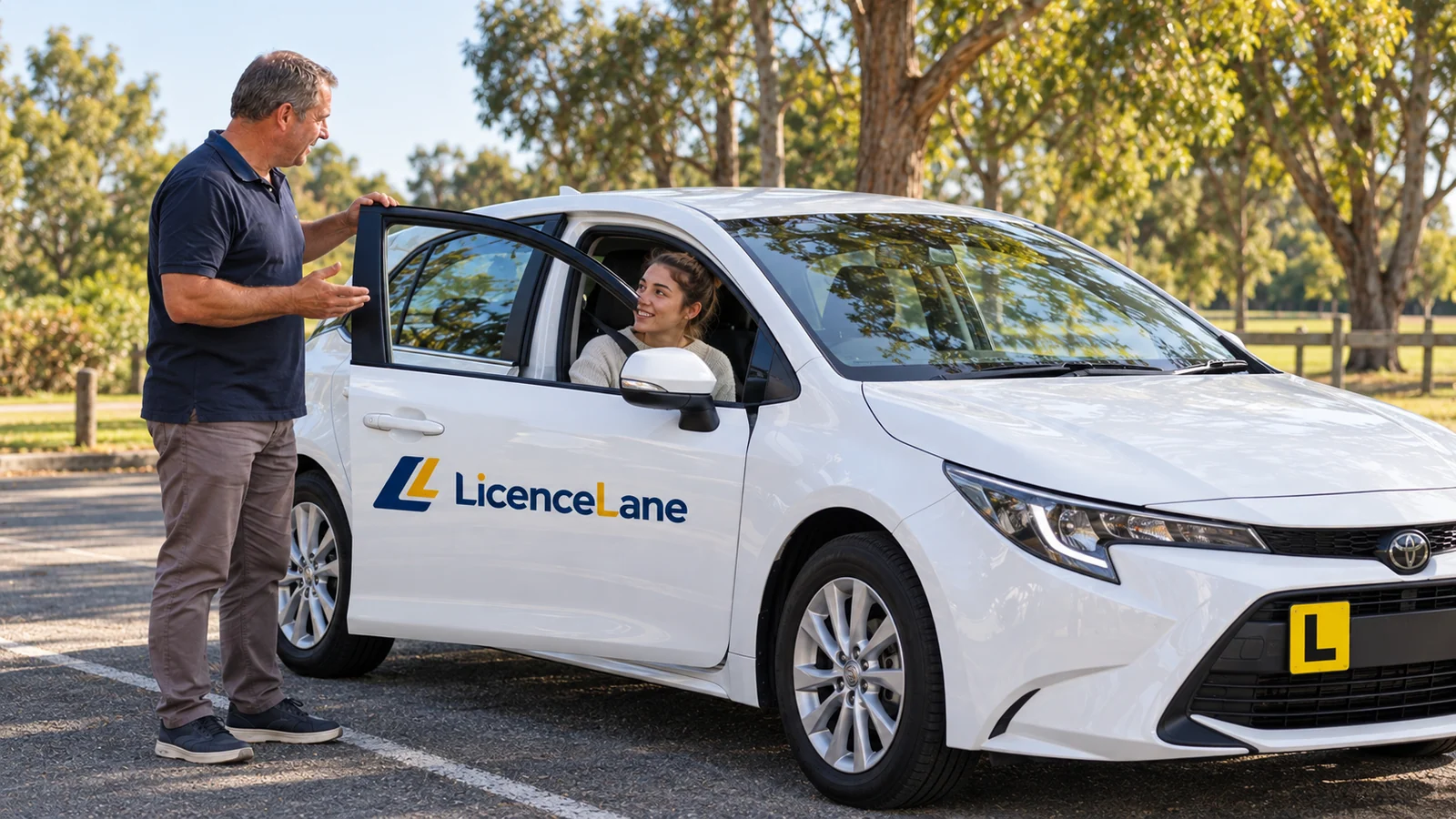
Getting a NSW car licence starts with learning the road rules, obtaining your learner licence and building supervised driving experience. The route to your provisional P1 licence depends on your age and licence history. For a first-time learner, professional lessons work best as part of a realistic practice plan that also covers the official eligibility requirements.
This guide explains the ordinary NSW car-learner pathway. Overseas and interstate licence holders should check their transfer requirements separately, because the same waiting periods and logbook rules do not necessarily apply.
Start with your learner licence
You must be at least 16 to be issued a NSW learner driver licence. You need to pass the Driver Knowledge Test, satisfy the identity and eyesight requirements and complete the licensing transaction with Service NSW. Passing a knowledge test by itself does not give you permission to start driving.
Use the official Driver Knowledge Test information to choose the available online or service-centre option and check its eligibility requirements. Study the NSW Road User Handbook rather than relying only on memorised practice answers. The rules you learn here will be needed when you begin making decisions in traffic.
Before your first lesson, check that your learner licence has actually been issued and remains current. Tell the instructor about any conditions printed on it, such as a requirement to wear corrective lenses. Bring the licence and your logbook or approved app to the lesson.
Understand the requirements for your age
For the usual pathway while under 25, you need at least 120 logged hours, including 20 hours at night, and must hold your learner licence for at least 12 months before the Driving Test. The minimum test age is 17, and you must pass the Hazard Perception Test first.
If you are 25 or older, NSW does not require a learner logbook or the ordinary 12-month learner holding period. You still need a learner licence, the Hazard Perception Test and the practical Driving Test. An exemption from counting hours does not establish that you are ready to drive alone.
If your birthday, an interstate transfer or a previous licence affects your situation, ask Service NSW which requirements apply. Base your intended test date on that answer and your progress, rather than the expiry date of a lesson package.
Record practice in an accepted logbook
NSW accepts its paper learner logbook and the approved Roundtrip app. Other apps advertised as driving logs are not automatically accepted. If you have older records in an app that is no longer supported, follow Service NSW's transfer instructions before assuming those hours are ready for submission.
Record genuine driving accurately and have the supervising driver complete the required verification. Check totals regularly, including the night-driving component, so missing information can be resolved while the trip is still easy to remember.
Keep learning goals alongside the hour count. A record showing repeated practice of one easy route tells you less about readiness than notes explaining what you can now do independently. Useful notes might identify lane changes that need prompting or intersections you can approach and negotiate consistently.
Use instructor bonus hours correctly
Eligible structured lessons with a licensed NSW driving instructor can count at three times their actual duration. The bonus applies to a maximum of 10 actual instructor hours, providing up to 20 additional logbook hours. Lessons must meet the scheme's requirements; merely paying someone to supervise you is insufficient.
The bonus does not triple your night-driving experience. For an eligible one-hour night lesson, the actual hour can count towards night driving, while the additional bonus hours count as daytime hours. Confirm the entries with your instructor and avoid adding a bonus again if the app has already calculated it.
The Safer Drivers Course has a separate eligibility and credit arrangement. Ordinary driving lessons booked through a marketplace are not automatically that approved course. Check the official course information if you want to use it as part of your learning plan.
Follow NSW learner conditions on every drive
Your supervisor must hold a full Australian driver licence and sit beside you. Display L plates as required, keep your blood alcohol concentration at zero and follow the learner maximum of 90 km/h, even where a higher road limit applies. A lower posted limit still controls your speed.
NSW learners must not use a mobile phone while driving, including hands-free use, and must not tow another vehicle. Read the full conditions before practising; this short explanation does not replace them. When crossing a state border, check both your licence conditions and the rules applying where you will drive.
Set navigation and sort out belongings before leaving. Ask your supervisor to manage directions so your attention can stay on driving. If you need to discuss a mistake in detail, find a safe, lawful place to stop first.
Build a practice plan around skills
An initial lesson can help identify where to begin. A complete beginner may need time with seating, mirrors, steering and gentle braking before busier roads. Someone returning after a long break may need an assessment of existing skills and a focused plan for the gaps.
Agree on one or two priorities for each session. Between lessons, practise suitable tasks with your supervisor and report back on what was difficult. For example, if lane selection is the goal, choose an appropriate familiar road before adding unfamiliar intersections and heavier traffic.
Introduce night driving and more demanding conditions when your supervisor or instructor considers you ready. Spread practice across different situations instead of treating the last few hours as a deadline to be filled. A balanced plan also leaves time to correct habits before they become routine.
Prepare for the hazard and practical tests
Under-25 learners can ordinarily take the Hazard Perception Test after holding their learner licence for 10 months. Passing it does not remove the remaining requirements for the Driving Test. Older learners can take it when ready under the applicable rules.
Before booking the practical test, review your eligibility, logbook, learning goals and ability to drive without coaching. If using Roundtrip, follow the official submission instructions and timing. Ask your instructor for specific feedback about readiness rather than a prediction that you will pass.
A useful final practice session checks how you respond to unfamiliar directions and ordinary changes in traffic. Memorising a route is much less useful than making safe decisions when the route changes.
Choose lessons that fit your next step
Compare instructors by transmission, availability, teaching approach and service area. Ask what the first lesson will cover and how feedback will be given. Choose lesson times you can attend consistently and read the full price, inclusions and booking terms before paying.
LicenceLane lets you compare independent car instructors and book available lessons online. Your instructor provides the tuition; Service NSW and Transport for NSW administer licensing and testing. Keep your lesson bookings, government test appointment and logbook requirements organised as separate parts of the same learning plan.
Official sources
Official pages checked on . The authority's page prevails over this guide.
- NSW Government — Learner driver licence (opens in a new tab)
- Service NSW — Apply for a learner driver licence (opens in a new tab)
- NSW Government — Using your learner driver log book (opens in a new tab)
- NSW Government — Learner driver log book app (opens in a new tab)
- NSW Government — Driving Test (opens in a new tab)