
On this page
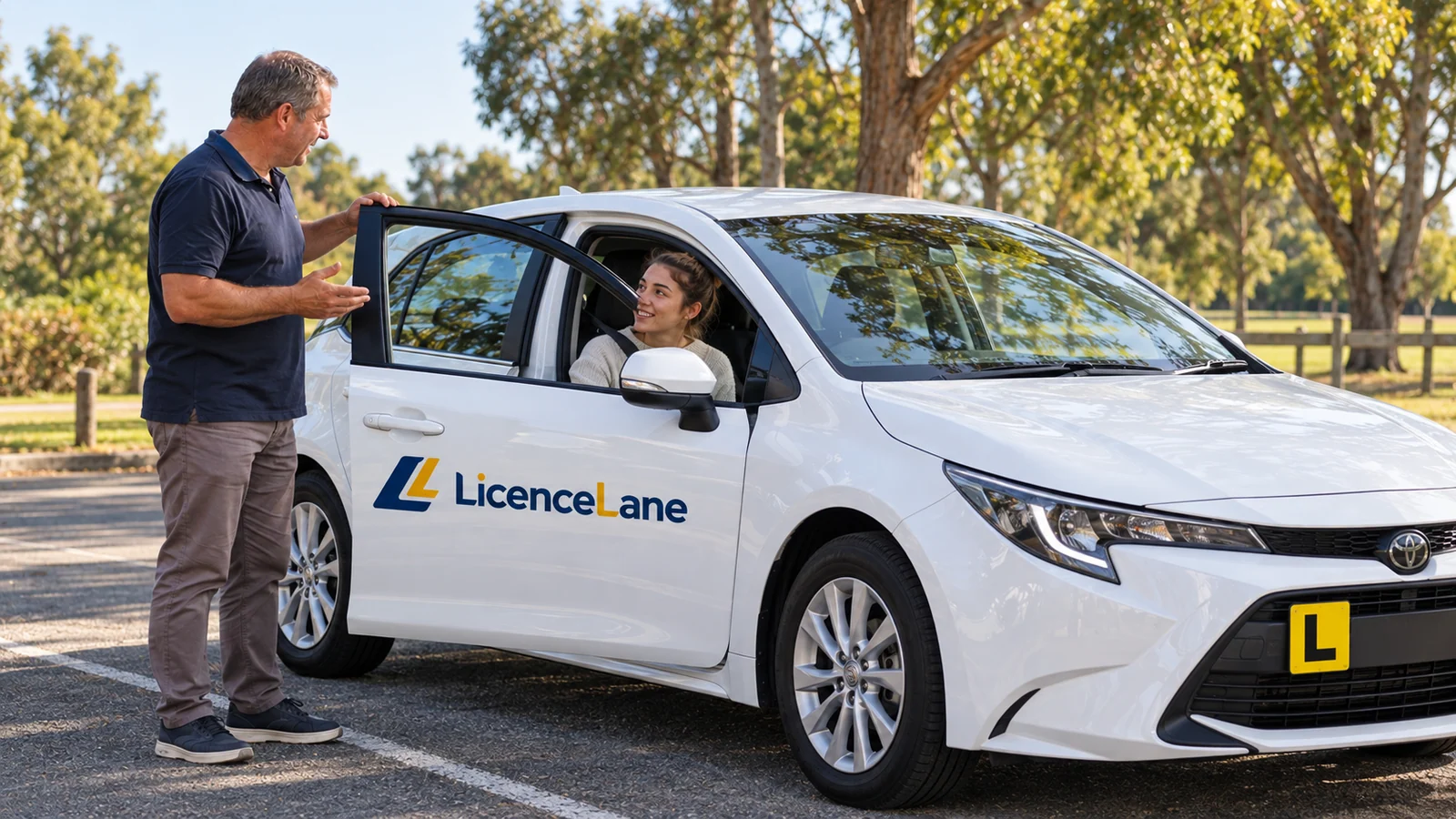
Tasmania allows learners to take their P1 driving assessment with a government assessor or an authorised private P1 assessor. Those options can have different booking arrangements and service inclusions. Understanding who will assess you, which car you will use and what you are paying for helps you organise the day correctly.
An ordinary instructor can help with preparation and a suitable vehicle, but instructor authority alone does not authorise the person to conduct the P1 assessment. LicenceLane's private lesson or support booking should always be distinguished from the official assessment appointment.
Check the current novice eligibility requirements
For the ordinary current Tasmanian novice pathway, you must be at least 17, have held the learner licence for 12 continuous months and completed 80 supervised hours, including 15 at night. Complete the applicable Hazard Perception Test before booking the practical assessment.
Check your logbook and completion declaration using the official instructions. If you hold an older L1 or L2 record, have overseas experience or have had an interruption to your licence, confirm the correct pathway with Transport Tasmania or Service Tasmania.
Readiness also matters. Ask your instructor whether you can manage ordinary driving situations without repeated prompts. An assessment booking is most useful when you can demonstrate the required skills consistently, rather than when you have merely reached the earliest eligible date.
Understand the government assessment option
Eligible P1 applicants can use the official government booking arrangements. Some circumstances require assistance through Service Tasmania, including particular assessment types or support needs. Check the booking information that applies to you rather than assuming every appointment can be made online.
Save the confirmed assessment location and time. If using an instructor's vehicle, check availability for preparation, travel, the assessment and the return arrangements. Your instructor's meeting point may differ from the location shown on the government confirmation.
A warm-up lesson or vehicle-support purchase does not itself book the government assessment. Check separately whether the assessment fee is included in any quoted service and who is responsible for each booking. Keep both confirmations together without treating them as the same transaction.
Confirm the assessment vehicle
You need a suitable vehicle for the assessment, whether supplied by you, an instructor or an authorised provider. Check the vehicle checklist attached to the official booking confirmation. A vehicle must be roadworthy and acceptable for the assessment; a photograph or general promise that a car is available is insufficient.
Practise the vehicle check before the day. The official preparation leaflet describes checking controls such as brake lights, indicators and reverse gear. Become familiar with the actual vehicle so you can operate its controls without distraction.
Ask about any change of vehicle before accepting it. Confirm the transmission because an automatic assessment can affect your subsequent driving entitlement. Keep the car clean, secure loose belongings and resolve defects early rather than hoping they will be overlooked at the appointment.
Prepare for the driving tasks
The official Tasmanian preparation information describes an on-road assessment divided into sections, including normal driving and two driving exercises. The exercises involve safe, lawful turnarounds and parking, including reverse parallel parking. Read the current leaflet so the assessor's explanation is familiar.
Practise the underlying skills with suitable supervision. Observation, positioning and deciding where a manoeuvre is safe matter more than memorising a particular point on one road. Ask your instructor to explain any task you can perform only with continuous prompts.
During a preparation session, try following directions on a route you have not rehearsed. Discuss how you handled the decisions afterwards. An instructor can help you improve, but cannot guarantee the exact assessment route or the result.
Organise documents and arrival
Follow the appointment checklist for your licence and circumstances. Bring your current licence and any required logbook, identity or translation documents. If you need glasses or contact lenses to meet a licence condition, use them for the assessment.
The official preparation leaflet asks applicants to arrive at least 15 minutes before the assessment time. Build travel and parking time around that instruction. Confirm the exact location, especially if your lesson begins somewhere else or the private provider uses a separate meeting point.
If you need an interpreter or another adjustment, arrange it through the appropriate official channel beforehand. Do not assume a friend can attend in a role that has not been approved. Read the current instructions from the assessor conducting your appointment.
Use support without confusing its role
A support service can provide a preparation lesson and use of a suitable car for the booked period. The listing should explain the location, timing, vehicle and any waiting or return arrangements. Ask questions before paying if those details are unclear.
Check the full payable price and which fees belong to the assessment provider. Read the change and cancellation rules for both the private service and the official assessment. Moving one appointment does not automatically move the other.
On the day, use the warm-up to settle into familiar skills. If a serious problem with readiness or the vehicle appears, address it with the relevant provider rather than treating the booking as a reason to proceed unsafely.
Complete the next step after your result
After an unsuccessful assessment, use the feedback to identify what needs further practice and check the rebooking arrangements. Confirm your continuing licence conditions before driving again. Overseas conversion applicants should follow their separate licensing instructions rather than assume novice rules apply.
After a pass, complete the required licence-issue process and read the conditions attached to your P1 licence. The assessment result and the issued authority to drive are related steps, but you should complete the official process before driving beyond your current entitlement.
LicenceLane offers available independent-instructor lessons and, where listed, support for separately booked government car assessments in Tasmania. It does not conduct the assessment or issue a licence. Confirm the exact private service and your official appointment before making a test-day plan.
Official sources
Official pages checked on . The authority's page prevails over this guide.
- Plates Plus Tasmania — Novice car licensing pathway (opens in a new tab)
- Transport Tasmania — Booking with a private P1 assessor (opens in a new tab)
- Transport Tasmania — Government assessment booking (opens in a new tab)
- Transport Tasmania — Preparing for a P1 or conversion assessment (opens in a new tab)
- Transport Tasmania — About your driving assessment leaflet PDF (opens in a new tab)