
On this page
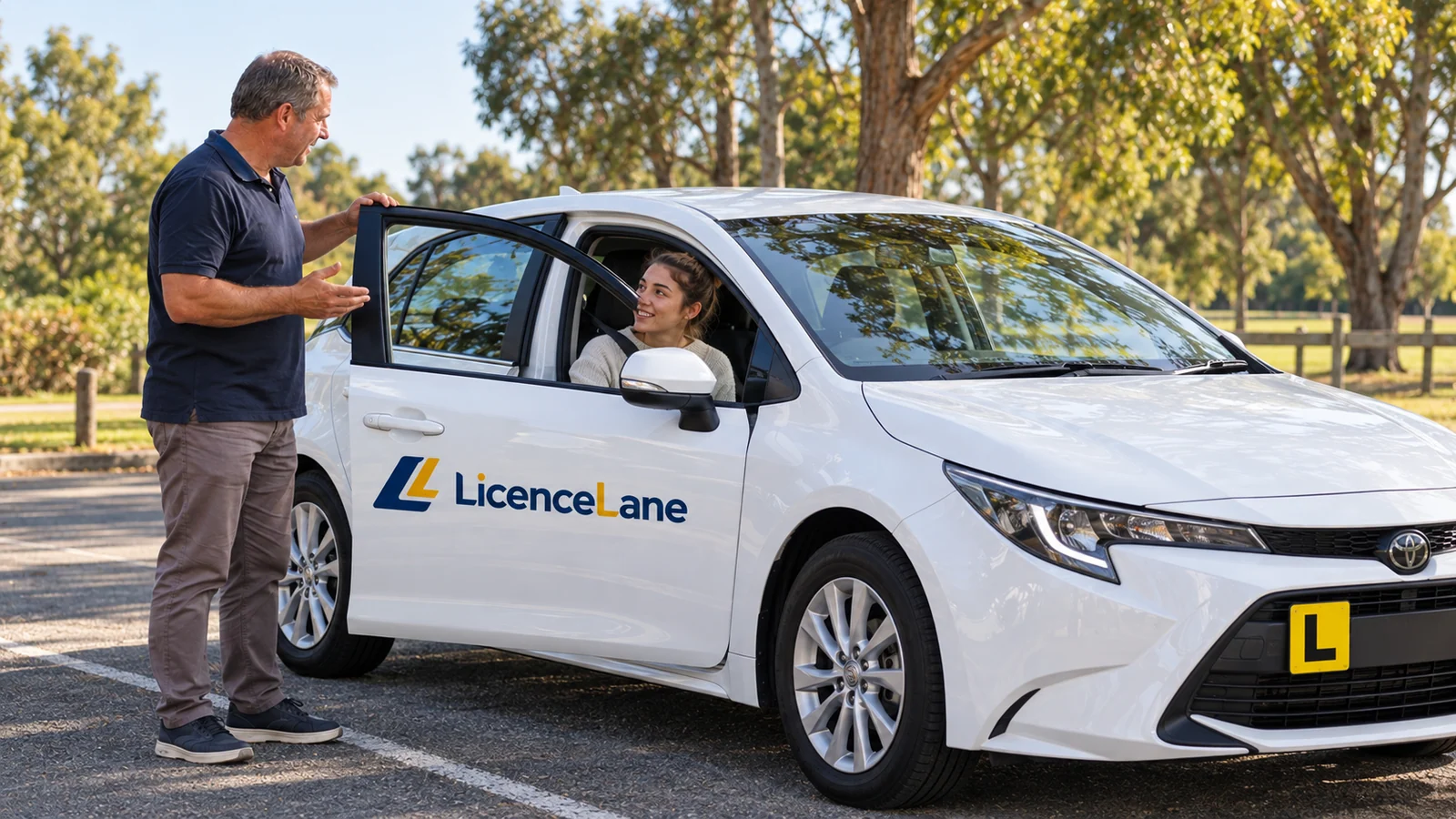
The Victorian Drive Test checks whether you can drive safely and independently in normal traffic. It includes a vehicle-control check and an on-road assessment, so preparation should cover both your driving and the car you will use. A government appointment, an instructor's preparation lesson and use of a test vehicle are separate arrangements that need to fit together.
This guide explains how to organise the ordinary car Drive Test. If the appointment is for overseas licence conversion or another special purpose, also follow the instructions issued for that application.
Check eligibility before arranging support
For the usual learner pathway, you must be at least 18, have held your permit for the required period and passed the Hazard Perception Test. Under-21 applicants ordinarily need 120 supervised hours, including 20 at night, properly recorded and declared.
The ordinary permit holding period is 12 months under age 21, six months from 21 to 24, and three months from 25 onwards. These are eligibility requirements, not estimates of how long any particular person needs to learn. Confirm any exemption or transferred licence history with VicRoads.
Check that your permit and test records are current. A private instructor can help you prepare, but cannot waive an incomplete government requirement. Resolve missing declarations or uncertain dates before committing to a test vehicle and appointment.
Understand the assessment structure
Transport Victoria describes a pre-drive check followed by on-road driving in two stages. You must pass the first on-road stage to progress to the second. Read the official Drive Test information so the structure is familiar before you arrive.
The purpose of preparation is to demonstrate safe decisions consistently. Practise observing traffic, selecting a suitable position and speed, responding to signs and managing intersections. Ask your instructor to explain which behaviours still need prompts and what independent performance would look like.
A mock assessment can be useful when it produces specific feedback. It should not be presented as an official test, an exact route prediction or a guaranteed result. After the session, identify two or three practical priorities and work on them in appropriate conditions.
Choose the actual vehicle early
VicRoads does not supply a car for the ordinary Drive Test. You need an eligible vehicle, which may be your own or an instructor's. Check the complete official criteria before making arrangements, because roadworthiness alone does not establish suitability for the assessment.
The assessment rules include requirements affecting the parking brake and the test arrangement. Transport Victoria states that a vehicle with an electronic or foot-operated parking brake cannot be used for a solo test. Instructor-accompanied arrangements have their own criteria, so confirm the exact vehicle and arrangement rather than applying a rule from another state.
Ask the provider to confirm the car's transmission and suitability when you book. If a replacement vehicle is proposed, repeat the check. Avoid leaving the first experience of unfamiliar controls until the assessment begins.
Prepare for the pre-drive check
Practise locating and operating the controls in the car you will use. Make sure you can adjust your seat and mirrors, understand the dashboard and operate the required equipment without searching around the cabin. Read the official pre-drive checklist for the full set of items.
Check the car's condition in advance, including lights, indicators, tyres and seatbelts. Clear unnecessary loose objects and keep the interior clean. If the car needs attention, arrange a repair or a compliant alternative before the appointment.
Modern assistance systems do not remove your responsibility to observe and control the vehicle. Follow Victoria's current instructions on devices and driver-assistance features. Do not rely on advice from a different jurisdiction, where the equipment rules may differ.
Coordinate the lesson and test timetable
Start with the official appointment details, including the correct VicRoads location. Separately record your instructor's meeting point, the start of any warm-up and the period for which the vehicle is reserved. A lesson pickup address may be different from the test centre.
Allow time for travel, parking and the arrival instructions in your confirmation. Ask whether the support booking covers waiting and the return journey. The on-road test duration is only one part of the time you may need the instructor and car.
Check the price inclusions carefully. Government test and appointment fees may be separate from a private lesson or vehicle fee. Read cancellation and change rules for each booking; changing one does not automatically change the other.
Bring the documents required for your application
Use the current VicRoads checklist. It includes your learner permit or accepted identity documents and evidence of supervised hours where required. Follow the instructions for myLearners declarations or a paper logbook, and bring any additional documents specifically requested.
Overseas conversion applicants may need their overseas licence, approved translation and other records. Confirm those requirements with VicRoads before the day. The documents needed for a conversion appointment can differ from those of a first-time Victorian learner.
Wear any glasses or contact lenses required for driving. Keep your appointment details together with the documents so you can check them without hurriedly searching your phone at the counter. If something is missing, contact VicRoads early to find out whether the appointment can proceed.
Use the final practice session well
The last lesson is a useful time to settle into the car and review familiar skills. Ask for clear feedback about decisions that remain inconsistent. Trying to learn several new manoeuvres immediately before the assessment may add pressure without providing enough time to consolidate them.
Practise following directions while still giving priority to safe, lawful driving. If you misunderstand a direction, ask for clarification when appropriate. A sudden manoeuvre to correct your route can create a much more serious problem than continuing safely.
Prepare for ordinary changes in traffic, roadworks and weather. Local familiarity can help you understand the journey to the centre, but no private provider can guarantee the test route. Your skills should remain usable on a road you have not memorised.
Understand the next step after the result
After an unsuccessful test, read the feedback and agree on targeted practice before rebooking. Confirm the current rebooking requirements with VicRoads and arrange any new private support separately. Overseas licence holders must check their authority to continue driving after failure; it should not be assumed to remain unchanged.
After passing, complete the required licence transaction and understand the conditions attached to the licence issued. Pay particular attention to probationary and transmission conditions. The official process determines when and how you may drive without supervision.
LicenceLane can help you compare available independent instructors for Victorian lessons and test-day support. Check the exact vehicle, location, service inclusions and availability before paying. The instructor provides the private service, while the authorised testing body conducts the Drive Test and the licensing authority determines your licence outcome.
Official sources
Official pages checked on . The authority's page prevails over this guide.