
On this page
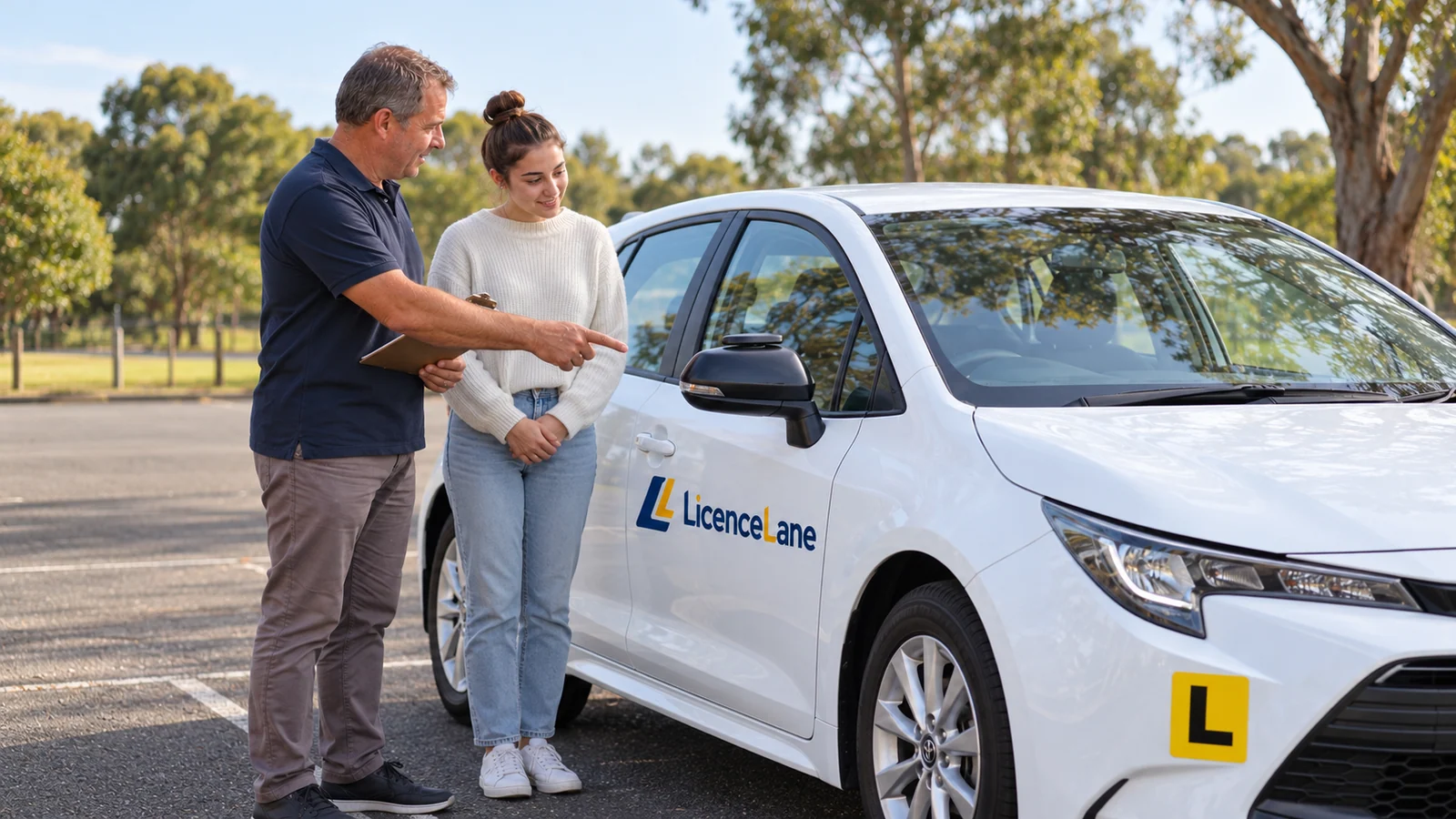
Victoria's learner pathway gives you time to build driving skills before applying for a probationary licence. Your age affects the minimum learner period and whether you must complete a supervised-driving logbook. Understanding those requirements early helps you choose lessons, organise practice and avoid booking a Drive Test before you are eligible.
This guide is for the ordinary first car-licence pathway in Victoria. If you already hold an overseas or interstate licence, check the relevant conversion process before following the steps for a new learner.
Obtain your learner permit before driving
Start with the official VicRoads learner-permit information and Learner Permit Test. The online course teaches road rules and safe-driving principles as well as providing a test pathway. Check its eligibility conditions, complete the required steps and arrange the permit issue with VicRoads.
A Victorian learner permit can be issued from age 16. Passing the knowledge test does not, by itself, authorise driving. You also need to satisfy the application, identity and eyesight requirements and have a valid permit issued.
Before your first lesson, check the permit's expiry and any conditions, including corrective lenses. Take the permit and the details needed to record practice. Tell the instructor if you are starting from the beginning, returning after a break or transferring previous learning experience.
Check the holding period for your age
You must be at least 18 to obtain a Victorian probationary car licence. Before the Drive Test, the usual continuous learner-permit periods are 12 months if you are under 21, six months if you are 21 to 24, and three months if you are 25 or older.
The minimum period and your practical readiness are separate questions. Someone who has completed the waiting period may still need more practice. Equally, a learner who develops skills quickly cannot simply ignore the required period.
If a birthday, permit interruption, exemption or interstate history affects your application, ask VicRoads to confirm the requirement. Make that check before choosing an intended test date. A lesson plan should fit your legal eligibility and current progress, rather than assume everyone can follow the same timetable.
Understand the Victorian logbook requirement
Applicants under 21 ordinarily need at least 120 hours of supervised driving, including at least 20 hours at night, before the Drive Test. Record the hours using the accepted Victorian logbook arrangements, including myLearners where applicable. The minimum-hour rule does not apply in the same way to learners aged 21 or over.
Record actual practice and have it verified correctly. Do not import another state's instructor-bonus scheme into a Victorian logbook. Check VicRoads' instructions if you are transferring records, mixing paper and digital entries or relying on an exemption.
For example, reaching 120 total hours with only 12 night hours would leave the ordinary night requirement incomplete. Review both totals during the learning period so you can arrange suitable supervised night practice without rushing it into the final week.
Choose a supervisor and a suitable vehicle
Drive only with a supervising driver who meets Victoria's requirements, seated beside you, and display L plates correctly. Both of you should understand the learner conditions and the supervisor's responsibilities before starting. Check the current official guidance rather than assuming a person is eligible simply because they own a car.
Use a registered, roadworthy vehicle that your licence permits you to drive. The owner should understand and authorise the intended use. Before practice, adjust the seat and mirrors, check your view and make sure you can reach the controls comfortably.
Discuss how directions will be given. Short, early instructions are easier to act on than a conversation that becomes urgent near an intersection. If either person needs a longer discussion, stop somewhere safe and lawful. A calm practice environment helps you understand mistakes and try a better approach.
Combine lessons with purposeful practice
Professional lessons can identify weaknesses that are easy to miss when you repeatedly drive familiar roads. Ask an instructor to assess your current ability and explain which tasks need attention. A useful plan names specific skills rather than promising a licence after a fixed number of lessons.
Between lessons, practise suitable tasks with your supervisor. If your instructor has been working on observation before changing lanes, ask what your supervisor should look for. Bring questions from those practice drives to the next lesson so the two types of learning support each other.
Vary the conditions gradually. Quiet local roads may suit early vehicle-control practice; later sessions can introduce busier intersections and unfamiliar roads when appropriate. Where tram routes form part of your driving environment, learn the applicable signs, markings and road rules from the Victorian handbook and supervised instruction.
Decide which transmission suits your needs
Think about the car you will actually drive after licensing. Automatic lessons can suit a household with an automatic car, while manual training involves coordinating additional controls. Existing confidence, access to a practice vehicle and your future needs all matter.
The transmission used for a Victorian Drive Test can affect the conditions on a probationary licence. Read the current automatic-transmission rules before deciding. Do not assume that a car licence obtained in an automatic vehicle automatically allows every manual-driving situation.
If you change transmission while learning, allow time to become familiar with the new vehicle. Keep the purpose practical: choose the training and assessment arrangement that matches the entitlement you need and the skills you are ready to demonstrate.
Complete the Hazard Perception Test
The Hazard Perception Test is a separate requirement before the Drive Test. It checks your responses to developing traffic situations. Use the official practice resources and understand the booking or online-completion process applying to your application.
Treat hazard awareness as part of every lesson. Discuss what you noticed early, what might happen next and how you allowed enough time to respond. This makes the online preparation more useful than simply remembering when to click in a sample scene.
Check that the result and any required logbook declaration are recorded before your practical appointment. If the system does not show a completed step, resolve it with VicRoads rather than expecting the Drive Test appointment to fix it.
Move towards your probationary licence
Ask for a readiness review when you can manage varied driving situations with little prompting. A preparation drive can identify habits that still need work and help you decide whether to book or postpone the practical assessment.
Before the test, check the vehicle requirements, identity documents, learner permit and any required logbook evidence. Arrange the official appointment and private instructor or vehicle service separately, keeping the dates and meeting points consistent.
LicenceLane provides a way to compare independent car instructors and book available Victorian lessons. Choose an instructor whose transmission, availability and service area suit your practice plan. VicRoads and the relevant Victorian authorities determine your eligibility, testing requirements and licence issue; lesson purchases do not guarantee a test result.
Official sources
Official pages checked on . The authority's page prevails over this guide.