
On this page
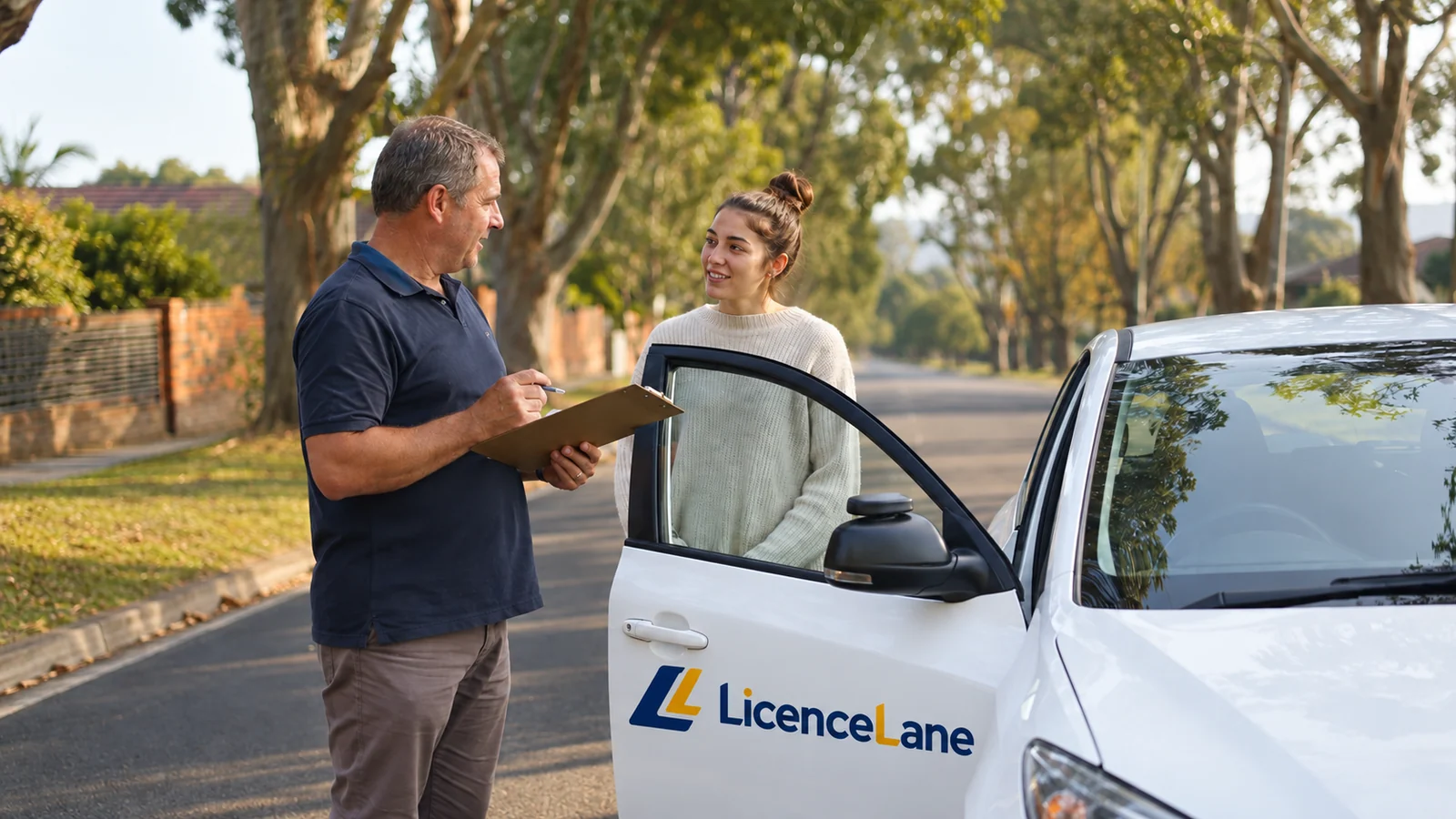
Learning to drive in Western Australia involves a learner's permit, supervised practice, the Hazard Perception Test and the Practical Driving Assessment. The practical assessment is usually called the PDA. Planning these steps together helps you build the required experience and book lessons at useful points in your learning.
This guide covers the ordinary first car-licence pathway. Overseas licence transfers and other special applications have separate rules, so check those requirements before assuming you need to start again as a new learner.
Begin with the official learner permit process
Use Transport WA's car-licence pathway to check the application, theory-test, identity and eyesight requirements. You can apply for a car learner's permit from age 16. Complete the required process and have the permit issued before driving on the road.
Prepare using the official road-rule resources. Practice questions are useful, but understanding why an answer is correct makes it easier to apply the rule in a real intersection. If you need assistance with language or the application process, ask the licensing service about the options before attending.
Check your permit details and any conditions when it is issued. Bring the permit to lessons and tell the instructor about any relevant restrictions. A booking confirmation or a successful theory-test result is not a substitute for a valid authority to drive.
Know the supervised practice requirements
If you are under 25, the ordinary car pathway requires at least 50 supervised driving hours, including five hours at night between sunset and sunrise. These hours must be properly recorded before your PDA. Learners aged 25 or older do not need to submit a logbook for a first car licence.
The absence of a logbook requirement does not remove supervision or the need to prepare. Your readiness depends on safe, consistent driving, not simply age. Discuss your existing experience with an instructor and plan enough practice to address the tasks you find difficult.
For the standard PDA pathway, Transport WA lists a minimum age of 17, a learner-permit holding period of at least six months and a passed Hazard Perception Test. Check the complete eligibility requirements before booking, particularly if your permit history is unusual or you are changing licence pathways.
WA announced reforms in April 2026 to increase learner periods and supervised hours. The figures above follow Transport WA's current published application requirements, checked on 2 October 2026. Before planning a test, check the latest official requirements and any commencement or transition arrangements affecting your permit.
Use the approved paper or digital logbook
Record hours in the department-issued learner logbook or Learn&Log, the digital logbook available through the ServiceWA app. Use the official instructions for setting it up, recording supervision and declaring completion. An ordinary notes app or trip tracker is not automatically an accepted licensing record.
Review entries after practice while the details are clear. Keep day and night totals accurate, and have the appropriate supervisor verification completed. If you change between paper and digital records, check how the records should be presented rather than duplicating hours.
For example, someone with 48 total hours and only three night hours still needs to complete both requirements. The next practice sessions should be appropriate to their readiness and conditions, not organised simply to fill numbers as quickly as possible. Keep a separate note of the skills practised as well as the time spent driving.
Follow WA learner conditions
You must drive with an eligible supervising driver and display L plates as required. Learners must obey posted limits and must not exceed 100 km/h, even where the road limit is higher. Read the full official conditions, including alcohol and other restrictions, before starting practice.
Make sure your supervisor understands the role and is legally eligible for it. A person holding a licence is not necessarily qualified to supervise every licence class or circumstance. Use Transport WA's supervising-driver guidance if you are unsure.
Before each drive, check the car's condition, adjust your seating and mirrors, and agree on the plan. Your supervisor can help with directions and identify a suitable place to stop for discussion. Avoid trying to solve a complicated navigation problem while you are also learning to control the vehicle.
Build experience beyond one familiar route
Start with conditions that match your current skills. Early sessions may focus on smooth steering, speed control and stopping. Later practice can include busier intersections, lane changes and roads with different speed limits, introduced with appropriate supervision.
Western Australian driving can involve very different environments. A learner practising mainly on suburban streets may also need preparation for higher-speed roads or country travel. Do not make a long or unfamiliar trip your first attempt at every new driving task at once.
After each session, identify something that improved and something that needs another attempt. For example, you may be judging gaps well but leaving lane selection too late. Specific feedback makes your next lesson more useful than a general instruction to become more confident.
Use professional lessons for targeted help
An instructor can help assess your starting point, explain unfamiliar rules and correct habits before they become established. Tell them how much supervised practice you can do between lessons and what vehicle you normally use. That information helps produce a practical plan.
Compare lesson options by transmission, service area, availability and teaching approach. Ask how progress will be reviewed. A fixed number of hours is a purchase quantity, not proof that every learner will be ready for assessment at the end.
If you are learning in both a family car and an instructor's car, allow time to adapt to their different controls and dimensions. Keep the safety routine consistent while checking the details of each vehicle before moving.
Prepare for the Hazard Perception Test
The HPT is a separate stage before the PDA. Use the official eligibility, practice and booking information rather than treating it as part of a private driving lesson package. Check that you have passed it and that the result is recorded before making a practical-test plan.
Connect the online preparation with your supervised driving. Ask what developing hazards you could recognise earlier and how your speed or position could give you more time. Discuss those examples after the drive so the explanation does not distract you in traffic.
If you do not pass, review the official feedback and practise before another attempt. Taking repeated attempts without understanding the task is unlikely to improve the underlying skill.
Plan the move to your PDA
Before booking, review the eligibility requirements, your logbook where required and your ability to drive without coaching. Confirm that a suitable vehicle will be available for the appointment. Government booking availability and an instructor's availability need to match.
Choose a location you can reach comfortably and follow the arrival instructions. A support service may include a warm-up and use of a vehicle, but it does not automatically include the official PDA booking or fee. Read the inclusions and keep both arrangements in writing.
LicenceLane lets you compare independent car instructors and book available lessons in WA. Use those lessons to develop the skills you need and review progress honestly. Transport WA administers the licensing pathway and assessment requirements; purchasing lessons does not guarantee a pass or a particular licence-issue date.
Official sources
Official pages checked on . The authority's page prevails over this guide.
- Transport WA — Learn to drive and log your hours (opens in a new tab)
- Transport WA — Book and pass your Practical Driving Assessment (opens in a new tab)
- Transport WA — Digital learner log book (opens in a new tab)
- Transport WA — Teach someone to drive (opens in a new tab)
- WA Government — Licensing reforms announced on 26 April 2026 (opens in a new tab)