
On this page
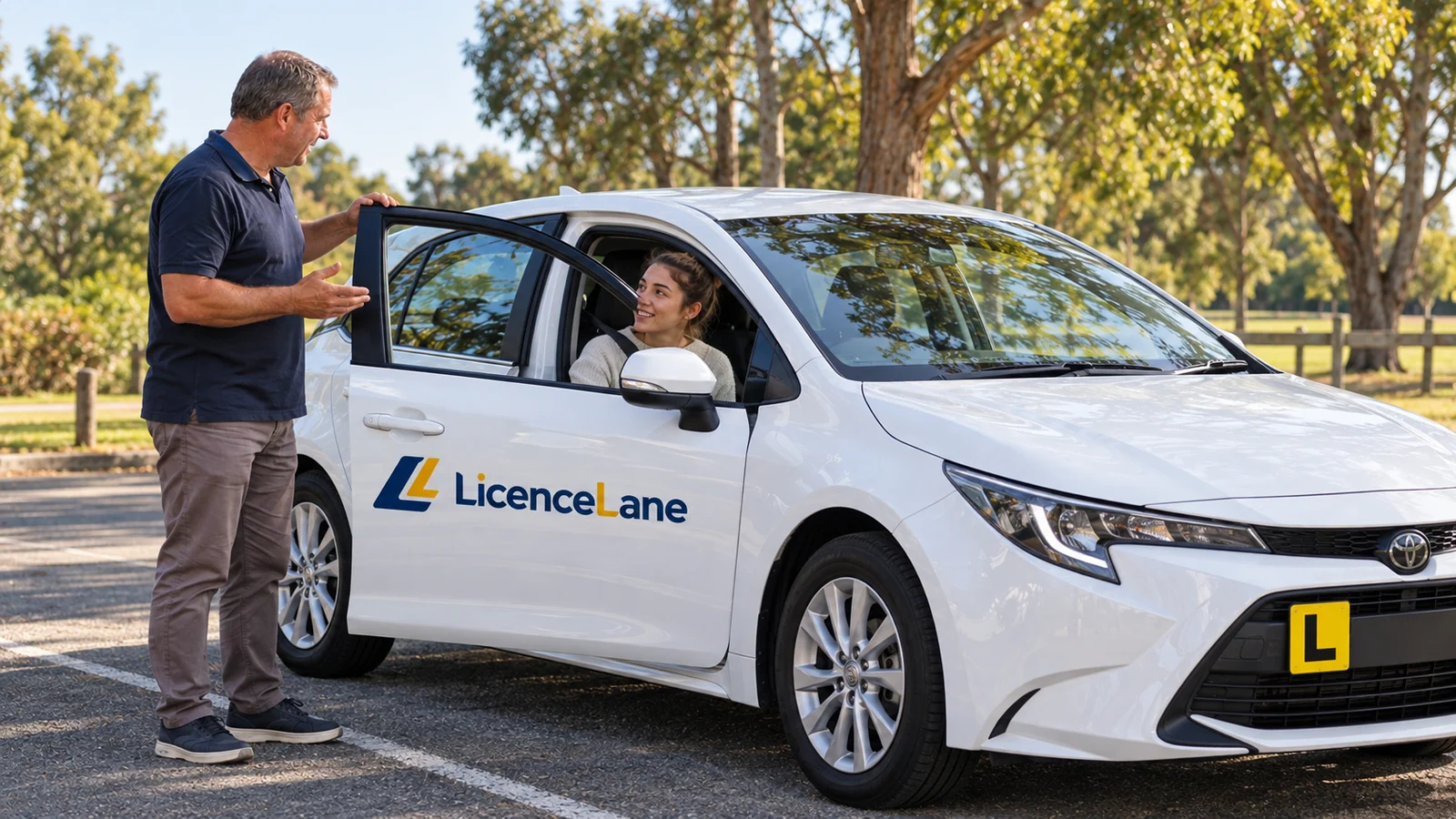
Choose automatic or manual lessons by the vehicles you expect to drive, the practice you can access and the licence rules where you are applying. There is no single automatic-licence rule for all of Australia.
What changes in the lesson
In a conventional manual car, you learn clutch operation and gear selection alongside steering, observation, speed management and traffic decisions. An automatic reduces the gear-changing tasks. Both require the same attention to safe road use.
The added controls do not establish how many lessons a particular learner will need. Compare your progress, confidence and access to supervised practice instead of assuming automatic is always cheaper or manual always produces a better driver.
Licence restrictions differ
Queensland
In Queensland, an automatic-only car entitlement is displayed as CA. Removing that restriction ordinarily requires a practical test in a manual car and completion of the licence amendment. Supervised manual learning is permitted under the applicable learning rules.
New South Wales
NSW illustrates why this should not be described as a permanent nationwide restriction. A driver who passes the NSW test in an automatic is restricted to automatic or clutchless-manual cars when driving unsupervised on P1. The ordinary automatic-test restriction does not continue on P2, although any separately imposed medical or other condition must still be followed.
Other states and territories
For another state or territory, check its current licensing authority rules before choosing a test vehicle or beginning manual practice. Do not assume that another practical test is always required, or that a restriction disappears at the same stage everywhere.
Compare your practical options
- Can you regularly use the chosen transmission with a lawful supervisor?
- Does an intended job require manual entitlement for a particular vehicle?
- Which vehicles will you use after licensing?
- Does the instructor offer the required transmission and a suitable test-day vehicle?
- What is the complete lesson or package price and what does it include?
Check overseas hire requirements with the rental provider and destination authority if travel is relevant. A possible future trip does not establish that every learner needs a manual licence today.
Start with the car you will actually use
Your first decision can be practical. Write down which car is available for supervised practice and which car you are likely to drive after licensing. If both are automatic, automatic lessons may give you more opportunities to repeat the skills taught. If a family or work vehicle is manual, learning its controls may be part of your immediate goal. Check that you are authorised to learn in that vehicle and that an appropriate supervisor is available.
Do not choose solely from a claim that one transmission is more impressive. Being able to change gears does not establish that a driver can judge a safe gap or respond to a pedestrian. Equally, selecting an automatic does not remove the need to understand the vehicle's controls, including how to select the correct gear before moving and park it securely.
Plan the first few lessons
Tell the instructor if you have never driven, have only practised in a quiet area or are returning after a break. A useful starting session establishes your current skills and introduces tasks at a manageable pace. In either transmission, this includes adjusting the seat and mirrors, understanding the controls, moving off safely and stopping smoothly.
For manual lessons, ask how clutch and gear practice will be introduced without overwhelming your observation and steering. For automatic lessons, ask how the instructor will help you develop accurate speed control and safe decisions as roads become more demanding. The aim is coordinated driving, rather than completing a list of controls as quickly as possible.
Discuss what you can practise between lessons. A short, specific goal such as improving smooth stops on a suitable road is more useful than a vague instruction to drive more. Your supervisor should understand the exercise and remain responsible for lawful, safe supervision.
Compare the total learning cost
There is no dependable automatic-versus-manual price formula for every learner. An hourly lesson price is only one part of the decision. Lesson availability, access to supervised practice, travel, vehicle hire for the test and any later transmission upgrade can affect your spending.
Ask each provider for the lesson duration, transmission, pick-up arrangements and complete compulsory price. If you are comparing packages, divide the total by the included training hours only after checking that the packages include equivalent services. A package containing test-vehicle use cannot be compared fairly with tuition alone simply by dividing both prices by the number of lessons.
Avoid buying more prepaid hours than you can realistically use within the stated validity period. Read the package conditions before payment, particularly if you are unsure which transmission you will continue with. A decision to change vehicles does not automatically make an existing purchase refundable or transferable.
If manual lessons feel difficult
Ask the instructor to identify the task causing difficulty. The issue might be coordinating controls, understanding the explanation, choosing an appropriate practice area or trying to learn too much at once. A change in lesson structure can be more informative than immediately deciding that manual driving is unsuitable.
You can also discuss trying an automatic lesson, provided your booking and learning authority allow it. This may help you assess which approach suits your present goals. It should be a deliberate decision about your needs, rather than a response to pressure to purchase a larger package. Neither choice guarantees a particular test result.
Questions to settle before your test
Confirm the transmission of the actual test vehicle, not just the vehicle pictured in a listing. Ask what entitlement passing in that vehicle would produce in your state or territory and how any existing condition affects the result. Check the authority's test-vehicle requirements and make sure your vehicle booking covers the government appointment.
If a different vehicle is proposed close to the test, allow time to become familiar with its controls and dimensions. Being comfortable in one automatic or manual car does not mean every other vehicle will feel identical. Your preparation should support safe driving in the vehicle you will use on the day.
Changing direction later
You can learn new vehicle skills later, but first check the authority, supervision and testing rules that apply to your licence. Training should prepare you for the vehicle you intend to drive independently.
Heavy vehicle transmission conditions are a separate question. A manual car entitlement does not automatically remove a truck restriction, and an automatic car entitlement does not automatically prevent a lawful heavy vehicle upgrade. Confirm the local pathway before booking.
Official sources
Official pages checked on . The authority's page prevails over this guide.