
On this page
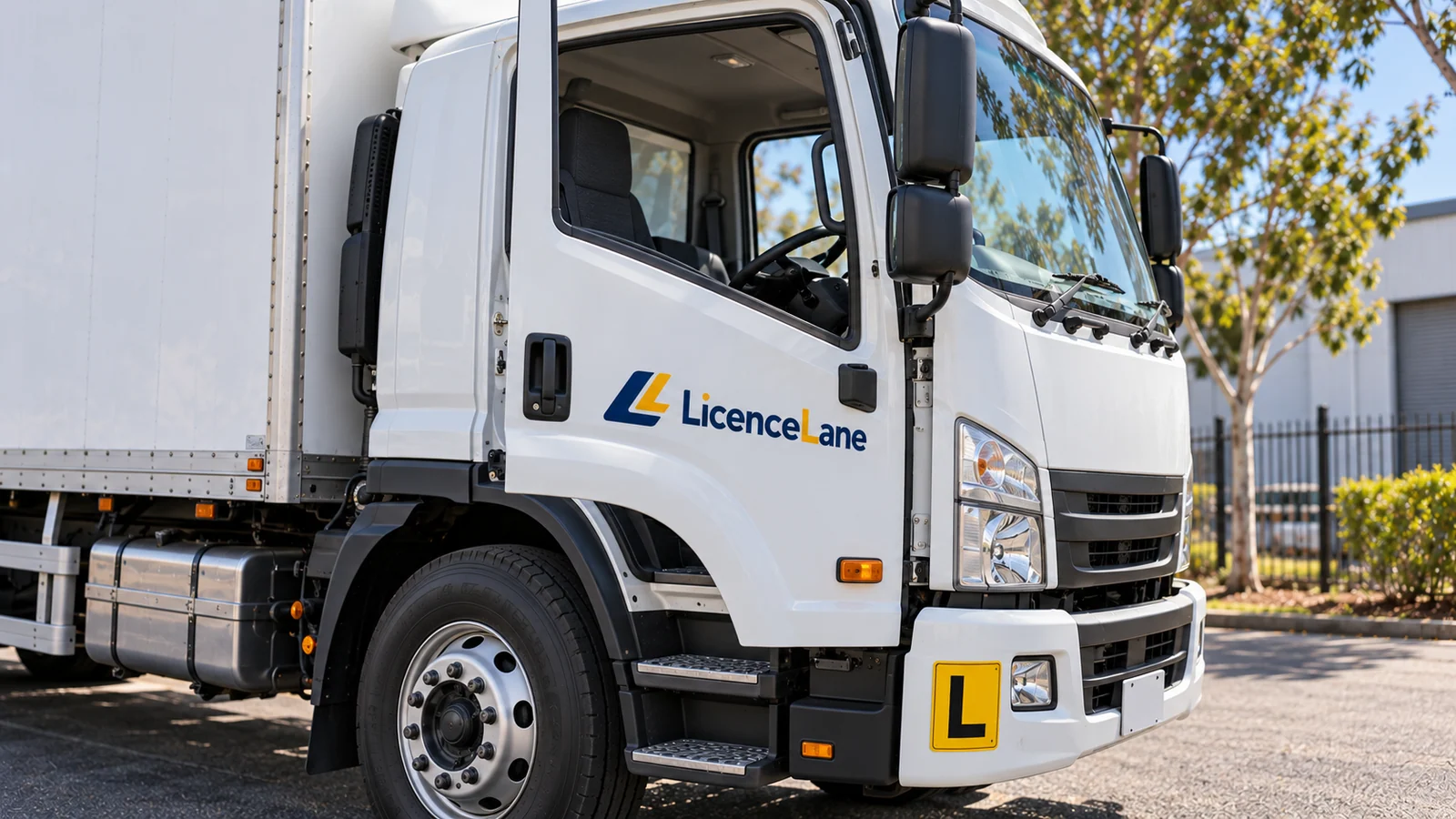
Choose a truck transmission by the vehicles you expect to drive and the licence conditions that will apply. A higher vehicle class and a broader transmission entitlement are different things.
The three training descriptions
| Description | What to check |
|---|---|
| Automatic | Whether an A condition will apply to the heavy vehicle class |
| Synchromesh manual | Whether a B condition will apply; this permits automatic and synchromesh heavy vehicles within the authorised class |
| Non-synchromesh manual | Whether the assessment will remove or avoid A and B transmission restrictions for the relevant entitlement |
Scroll the table sideways for all columns
In Queensland, B does not mean that automatic heavy vehicles are excluded. Schedule 3 of the Driver Licensing Regulation allows automatic or synchromesh gearboxes for the authorised heavy vehicle classes under that condition. It also allows automatic or manual class C vehicles.
The term unrestricted is commonly used for a transmission entitlement without an A or B limitation. It does not remove the licence's vehicle-class limits, medical conditions or other restrictions.
Compare the practical needs
An automatic vehicle reduces the driver's gear-changing tasks. A synchromesh manual involves clutch and gear selection. Non-synchromesh equipment needs the correct technique for that gearbox, taught in the vehicle with a qualified trainer.
None of these descriptions establishes a guaranteed number of lessons or a pass rate. Ask a prospective employer what its vehicles require rather than assuming all truck work needs a non-synchromesh licence. Similarly, do not assume that an automated manual transmission, a two-pedal truck or a manual-selection mode will produce a particular licence outcome. Confirm the exact assessment vehicle and TMR treatment.
Begin with a realistic vehicle or employment goal
If you need a licence for a particular job, ask the employer which class and transmission its vehicles require. Check whether the role accepts newly licensed drivers and whether it includes other duties or qualifications. A broad training package will not automatically address every employment requirement.
If you are preparing for several possible roles, compare current advertisements and speak with prospective employers. Separate requirements that recur from those attached to one unusual vehicle. This gives you a practical reason for choosing a transmission without assuming one option is always best.
For private use or a specific hire, obtain the actual vehicle specification. A truck described as easy to drive may still require a condition you do not hold. Match the proposed training to the vehicle and your current entitlement before comparing prices.
When automatic training may suit the immediate task
Automatic training may suit a driver whose intended vehicle is automatic and whose expected licence condition fits that use. It can reduce gear-changing tasks during training, allowing attention to the other skills that need to be developed.
It does not remove the need to manage the truck's dimensions, observe effectively, choose safe speeds and position the vehicle correctly. Nor does it guarantee that a learner will need fewer sessions or pass on the first attempt. Training needs remain individual.
Consider whether a likely change of vehicle could require additional training and another assessment later. That possibility does not make automatic training a poor choice; it is simply a factor to weigh against your immediate needs, available vehicles and budget.
When synchromesh training may be useful
Synchromesh training can suit someone who needs to operate a compatible manual truck as well as automatic vehicles within the authorised heavy class. Confirm that the expected Queensland B condition fits the actual work you plan to do.
Experience in a manual car may help you understand familiar controls, but it does not establish competence in a heavy vehicle. Vehicle dimensions, observation, road position and the particular gearbox still need attention. Ask the trainer how your existing experience will be assessed.
Clarify what the provider means by manual. The word alone does not tell you whether the truck is synchromesh or non-synchromesh. A clear vehicle and transmission description is more useful than assuming all manual courses lead to the same licence result.
When broader transmission training is worth considering
Training in a non-synchromesh vehicle may be relevant if your intended fleet or role requires that entitlement. Ask the employer and trainer about the actual equipment rather than buying a broader course solely because its title sounds more advanced.
The technique must be taught for the particular gearbox in a suitable training environment. Avoid relying on a short online instruction sequence or experimenting without lawful supervision. Your instructor should assess your starting point and explain what further practice is needed.
A transmission entitlement without A or B restrictions still operates within your vehicle class and other licence conditions. It is not permission to drive an HC combination on an HR licence, and it does not remove medical or other restrictions.
Compare the training arrangements as well as the gearbox
Ask how much driving time you receive, whether sessions are shared and which vehicle is used for the practical test. Establish how extra training is priced if the included hours are insufficient. A fixed package describes an inclusion, not a guaranteed learning outcome.
Compare the total cost of instruction, test-vehicle access, any warm-up, travel and government fees. Read cancellation, rescheduling and expiry conditions before committing. If the vehicle or test date changes, check whether the original transmission outcome can still be achieved.
Keep a short written record of the class, transmission and reason for your choice. Review it if an employer changes the proposed vehicle or your plans change before training starts. This helps you ask focused questions and avoid paying for a course whose outcome no longer matches the work you actually expect to do.
Confirm the outcome before booking
Give the trainer your current licence details and explain the entitlement you need. Ask which vehicle will be used for training and the test, what conditions are expected, and whether your existing licence history affects that result.
For class C, Queensland displays an automatic-only car entitlement as CA. An A condition on a heavy class does not necessarily restrict a separately displayed C entitlement. Check the actual classes and conditions rather than reading one code in isolation.
If you later want an A or B condition removed or changed, TMR requires a practical test demonstrating the necessary transmission skills. Follow the supervised-learning rules while preparing and complete the formal amendment before driving outside your existing entitlement without supervision.
Official sources
Official pages checked on . The authority's page prevails over this guide.