
On this page
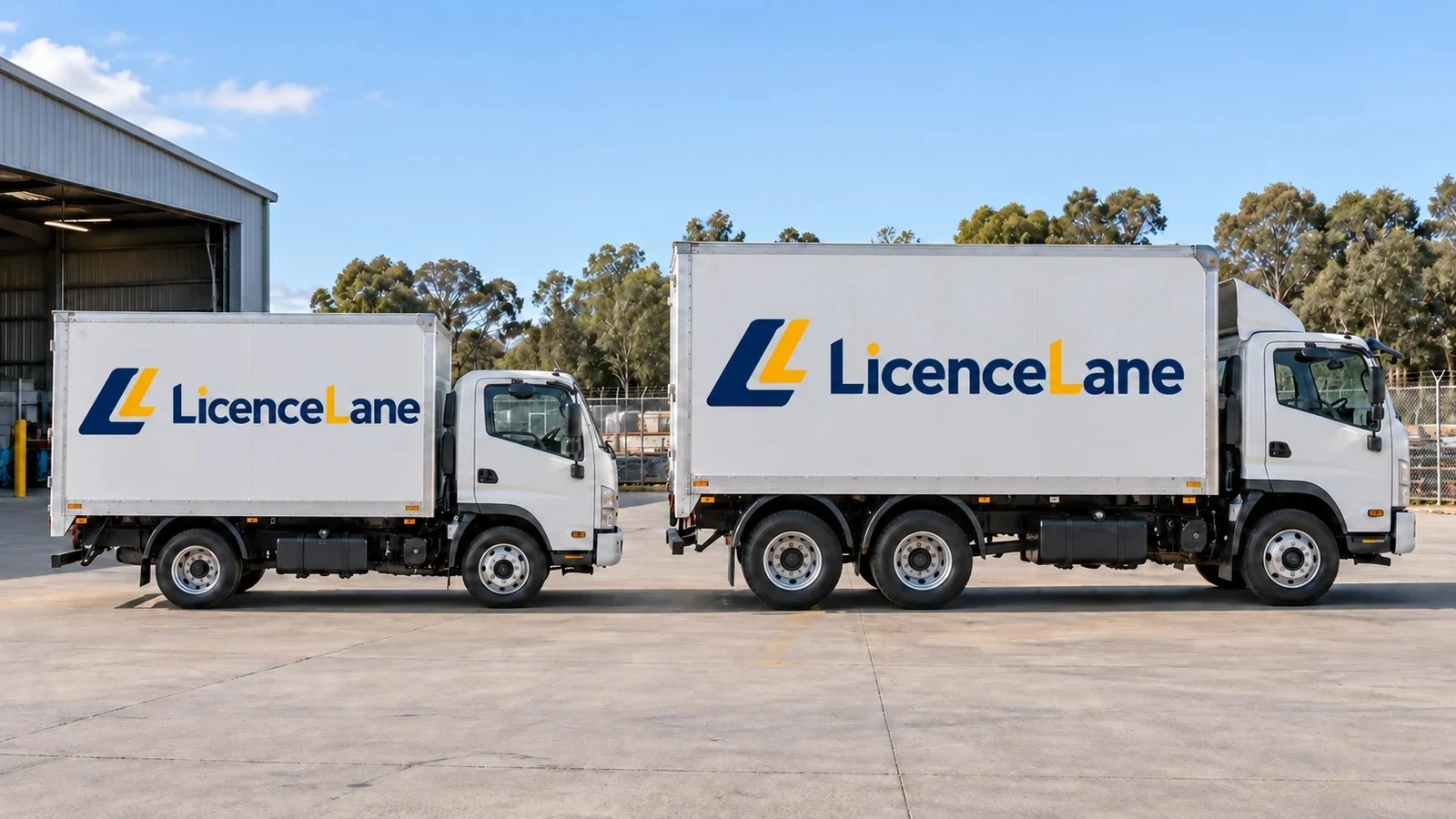
An MR licence covers two-axle buses and trucks over 8 tonnes gross vehicle mass (GVM), as well as vehicles in the lower LR and C classes. An HR licence adds buses and trucks over 8 tonnes with more than two axles, and articulated buses. Your licence conditions still apply.
Compare the classes
| Requirement | MR | HR |
|---|---|---|
| Main additional vehicles | Bus or truck over 8t GVM with no more than two axles | Bus or truck over 8t GVM with more than two axles; articulated bus |
| Trailer limit | Up to 9t GVM | Up to 9t GVM |
| Standard upgrade eligibility | Class C held for at least one year | Class C held for at least two years, or LR or MR for at least one year |
Scroll the table sideways for all columns
Qualifying licence time must fall within the preceding five years. Learner time does not satisfy these heavy vehicle upgrade periods; periods when the licence was suspended, surrendered, cancelled or expired do not count. Ask TMR to confirm interstate or overseas licence history before booking a test.
Choose for the vehicle you will drive
Check the intended vehicle's registered class, GVM, axle configuration and transmission. A job title such as delivery driver or bus driver does not establish the licence needed. Two vehicles used for the same work can require different classes.
MR may suit an eligible driver whose intended vehicle is within MR limits. HR may suit someone who needs a heavier rigid vehicle or articulated bus and meets the eligibility requirements. Neither choice guarantees employment or a particular number of training hours.
Check transmission and towing separately
An HR licence does not automatically remove a transmission restriction. Confirm whether the training and test vehicle will lead to automatic, synchromesh or unrestricted transmission entitlement. A truck over 8t GVM towing a trailer over 9t GVM generally requires HC; B-doubles and road trains require MC. Vehicle ratings, legal mass limits and road access requirements also apply.
Start with the vehicle rather than the job title
A two-axle rigid truck above 8t GVM fits the MR category. A rigid truck above 8t GVM with more than two axles fits HR. Both might be used for deliveries, so a delivery-driver advertisement alone does not tell you which licence to obtain.
Ask the employer or vehicle owner for the approved specifications and transmission. If several vehicles are involved, identify the most demanding entitlement you will actually need. A fleet may contain both MR and HR vehicles, and not every role necessarily uses all of them.
HR includes MR and lower classes, but broader coverage is only useful if it fits your plans and circumstances. Someone who needs an MR vehicle now may have different priorities from someone preparing for an identified HR role. Avoid treating the higher class as a guarantee of better employment prospects.
Compare the eligibility dates before booking
Under the standard route, class C held for one year can support an MR upgrade, while a direct C-to-HR upgrade requires two years. HR can also follow LR or MR held for one year, subject to TMR's qualifying-time rules.
Count the eligible licence period, not simply the time since you first received a learner licence. If you spent one year on a learner licence and one year on a provisional class C licence, the learner year does not create the two years required for the direct HR route.
Ask TMR to assess your history if licences from another state or country are involved or if there have been interruptions. Do this before paying for an assessment date. You do not need to obtain MR first when you already qualify for the direct HR pathway.
Compare the preparation each option requires
Moving from a car to either class involves learning the dimensions, controls and handling of the training vehicle. Your instructor should assess your starting skills and explain the next steps. Eligibility based on licence tenure is not a finding that you are ready for the practical test.
Ask how much time you personally spend driving and how progress is reviewed. A package duration is a purchased inclusion; it does not guarantee that the included hours will be sufficient. Allow for additional practice if the instructor identifies unresolved skills.
Check whether the test truck will be the same one used in lessons. If it changes, ask about familiarisation and confirm the transmission and assessment suitability. A licence-class label alone does not show that a particular vehicle meets TMR's full test specifications.
Research employment and later upgrades realistically
Compare current vacancies by required class, gearbox, experience, location and roster. Ask whether newly licensed applicants are considered. An employer may need a particular transmission entitlement or experience that neither an MR nor an HR package automatically supplies.
Separate the driver licence from additional requirements such as passenger authorisation, equipment training or workplace induction. A licence upgrade can be one part of meeting a role's requirements, but it does not establish that all the other parts are satisfied.
If your longer-term goal is HC, the usual Queensland route requires MR or HR held for at least one year. Discuss the actual pathway with TMR and avoid assuming that every intermediate class must be purchased. Future plans can inform the choice without replacing an immediate, evidence-based need.
Budget for the complete route
Compare training hours, transmission, test-vehicle access, warm-up time and government fees on the same basis. Identify which amounts are included and which are payable separately. A lower headline package price may omit services that another offer includes.
Ask how additional lessons and a further test attempt would be charged. Read cancellation, rescheduling and prepaid expiry conditions before buying, especially if eligibility or medical evidence is still being confirmed.
Keep the written inclusions with your booking details. They help you compare alternatives accurately and resolve changes to the vehicle or date. Make the final choice using confirmed eligibility, the vehicle you need and the training arrangements you can realistically complete.
Before booking
Confirm your eligibility with TMR, choose the transmission you need and ask what the lesson or test-day service includes. Training charges and government test fees are different costs. Use the current service listing for the complete purchase price and the official TMR fee page for government charges.
Official sources
Official pages checked on . The authority's page prevails over this guide.