
On this page
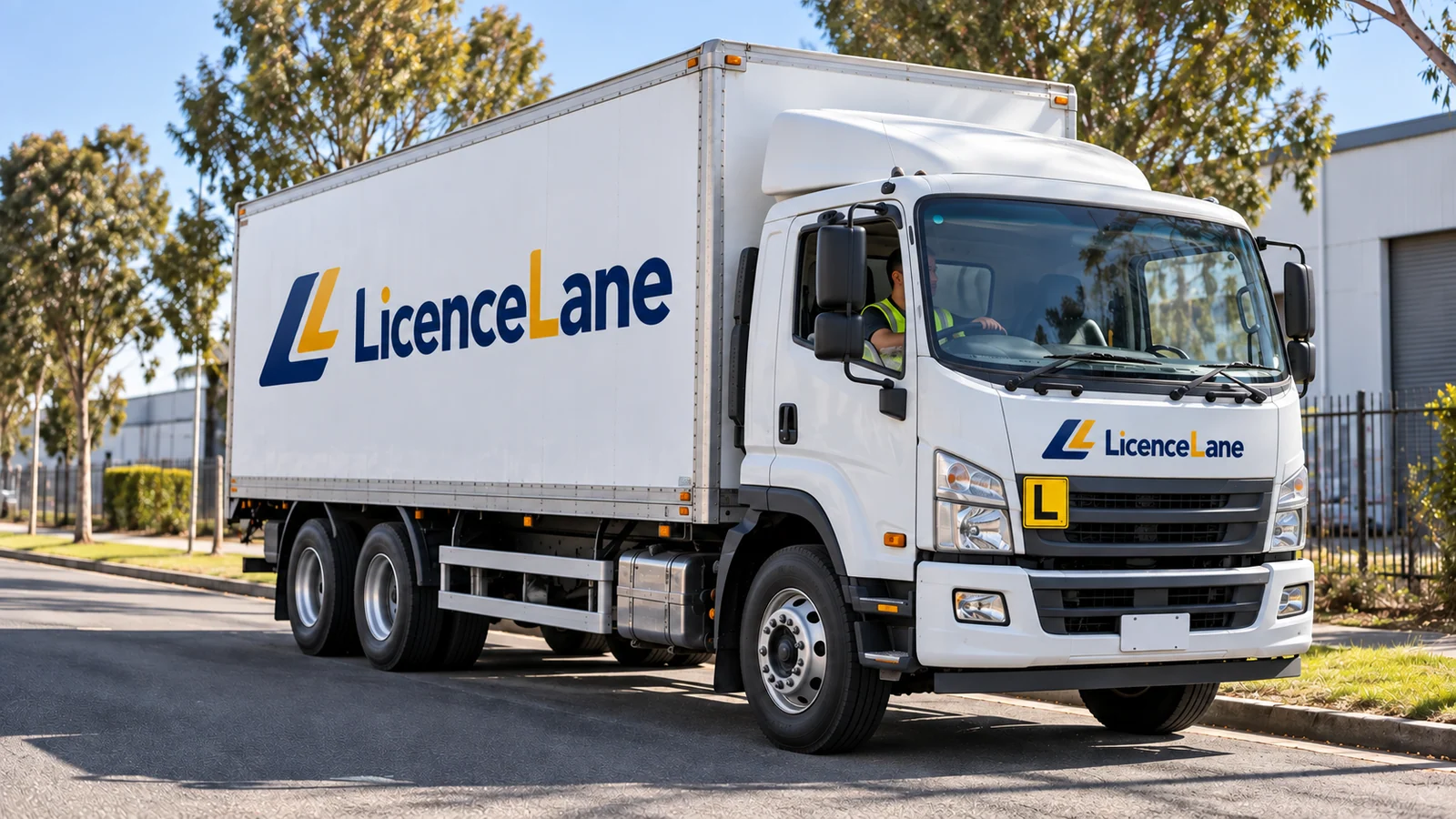
To obtain a Queensland heavy rigid licence, you need to meet TMR's eligibility and medical requirements and pass the required tests. Booking a training package does not itself make you eligible for the licence.
Confirm your eligibility
The standard HR upgrade routes are class C held for at least two years, or LR or MR held for at least one year. The qualifying time must fall within the preceding five years. Learner time and periods when the licence was suspended, surrendered, cancelled or expired do not count towards these upgrade periods.
Ask TMR to confirm eligibility before paying for a test if your licence history includes another state or country. Declare medical conditions as required; a medical certificate may be necessary to establish fitness for the higher class.
Complete the required knowledge test
The Queensland heavy vehicle road rules test has 10 questions and requires at least eight correct answers. A person who already holds an Australian heavy vehicle licence may be exempt. Check your circumstances with TMR and study its official material before attempting the test.
Train for the vehicle and transmission
An eligible Queensland provisional or open C licence holder can learn HR under the higher-class learning rules. Upgrade tenure is a separate requirement. You need a supervisor with the appropriate open licence held for at least one year, correctly displayed L plates and compliance with all learning conditions, including zero alcohol.
Choose automatic, synchromesh or non-synchromesh training according to the entitlement you need. Have TMR or your trainer explain the effect on your existing licence conditions before selecting a test vehicle. Your preparation should cover safe vehicle control, observation, road positioning, turning, braking and reversing.
Book and prepare for the practical test
Book through TMR or arrange for your trainer to book after the government test fee is paid. Confirm the centre can test HR and arrange a vehicle meeting all TMR specifications. The HR assessment vehicle requirements are stricter than the minimum definition of an HR vehicle.
Arrive at least 20 minutes early with your current licence, required identity documents and any required medical certificate. You need the registered operator's permission to use the vehicle. TMR gives an expected on-road test duration of 60–70 minutes for HR; allow additional time for checks and administration.
Prepare your information before contacting a trainer
Have your current licence class, conditions and relevant holding dates available. If part of your history is interstate or overseas, ask TMR what evidence it needs and how the qualifying period will be assessed. Resolving that question early avoids building a training plan around an incorrect test date.
Identify the truck or type of work you are preparing for. Where an employer has specified a transmission, record the requirement accurately. Ask whether the proposed training vehicle and assessment will produce the entitlement needed for that actual task.
Raise medical requirements before committing to a tightly scheduled package. A doctor or TMR may need further information, and an appointment for training does not override a restriction on driving. Allow time for the relevant evidence and decision.
Use the official knowledge-test requirements
Study the official Queensland material for the heavy vehicle road rules test. A practice quiz can help identify topics to review, but a provider's internal quiz is not automatically the government test or an exemption from it.
Confirm whether your existing Australian heavy vehicle licence makes a further knowledge test unnecessary in your circumstances. Do not assume that having driven a truck overseas, attending lessons or holding a long-term car licence removes the requirement.
Keep the completed test or exemption arrangements aligned with the practical booking. Ask TMR what must be recorded before the appointment can proceed. This administrative step is separate from the instructor's judgment that your driving skills are ready for assessment.
Review progress during practical preparation
Ask for feedback on specific behaviours after each session. Useful examples include observation timing, lane position and planning for the vehicle's size. The aim is reliable decisions in appropriate conditions, rather than performing one familiar route from memory.
Discuss which tasks still require prompts and which you can manage consistently. Use that information to choose further practice and decide whether the proposed test date remains realistic. Extra training should address identified needs, not simply repeat a package without explanation.
Any practice outside paid lessons must still be lawful. Confirm the vehicle, supervisor's entitlement and all learning conditions before driving. A friend holding some form of truck licence is not automatically qualified to supervise every class and transmission.
Coordinate the government booking and private vehicle
Check the licence class, centre, appointment date and time on the TMR confirmation. Then match those details to the private booking for the truck and instructor support. A centre listing general practical testing should not be assumed to offer every heavy class.
Ask where to meet the instructor and how the journey, any warm-up and the arrival deadline are handled. The private meeting point can differ from the test-centre address. Allow enough time for each part instead of treating the on-road assessment duration as the whole appointment.
If a date or vehicle changes, confirm both bookings again. A TMR reschedule does not automatically move the instructor's availability. Keep written confirmations so you know who is supplying the truck, which transmission it has and which costs are included.
Plan the documents and the journey afterwards
Check the current TMR instructions for identity, licence and medical documents. Make sure the vehicle has the required permission, registration, roadworthiness and equipment. Ask the provider to confirm assessment suitability in advance rather than discovering a missing requirement at the centre.
Arrange a lawful way to travel home under either test result. Passing still requires completion of the licence upgrade. If you are applying using an overseas licence, understand the consequences of an unsuccessful test before the day; failure can withdraw your Queensland authority to drive on that licence.
If unsuccessful, use the examiner's report to plan further preparation and confirm the heavy-class rebooking arrangements with TMR. A car-retest waiting table should not automatically be applied to HR. Recheck private vehicle costs and availability before paying for another government appointment.
Complete the licence upgrade
After passing, complete the issue or upgrade process with TMR. Do not drive HR unsupervised until the entitlement has been issued. Check the class and conditions on your licence or licence receipt. Passing does not guarantee employment or remove unrelated conditions.
Official sources
Official pages checked on . The authority's page prevails over this guide.
- Queensland licence upgrades and eligibility (opens in a new tab)
- Queensland Driver Licensing Regulation 2021 current version (opens in a new tab)
- Queensland written and online driver tests (opens in a new tab)
- Queensland test vehicle requirements (opens in a new tab)
- Queensland practical driving tests (opens in a new tab)