
On this page
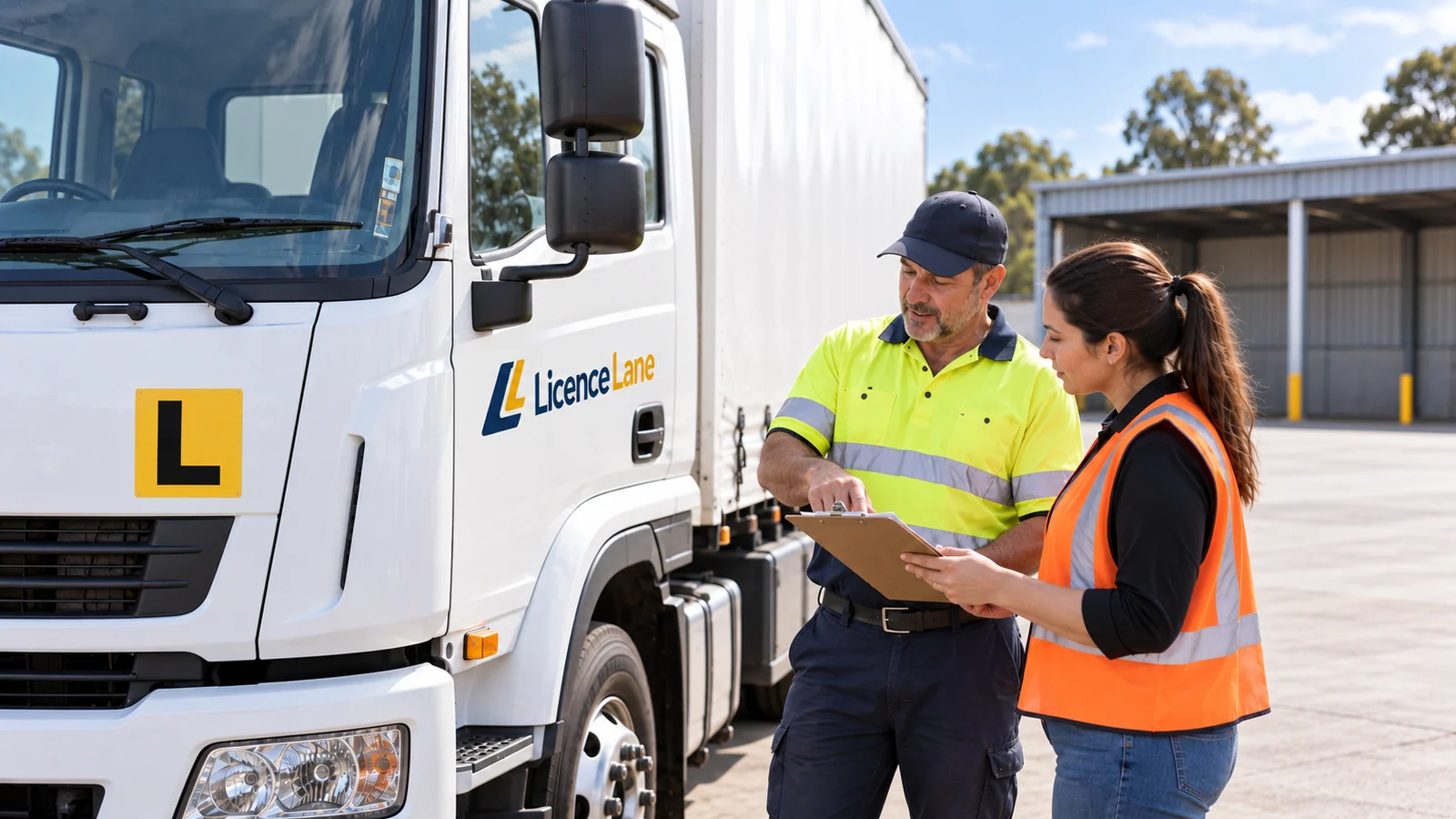
Your heavy vehicle class tells you which vehicle categories you may drive. Transmission conditions can limit which gearboxes you may use within those categories. Read both before accepting a vehicle.
What the codes mean
| Code or description | Meaning in Queensland |
|---|---|
| A | Automatic transmission only for the class or classes to which it applies |
| B | Automatic or synchromesh transmission for authorised heavy vehicle classes; automatic or manual class C vehicles |
| No A or B transmission restriction | No restriction from those codes, but the vehicle class and every other condition still apply |
Scroll the table sideways for all columns
The detailed B definition is in Schedule 3 of the Driver Licensing Regulation. TMR's shorter licence-code table should not be read as a ban on automatic heavy vehicles for B-condition holders.
Car and truck entitlements can differ
An automatic-only Queensland car licence is displayed as CA. TMR explains that a licence displaying C, with A separately recorded for another class, still authorises a manual car. An A condition does not necessarily apply to every class shown on a licence.
Ask TMR to clarify any uncertainty about the classes affected by a condition. Do not infer a truck entitlement merely from having driven a manual car, or from the appearance of a gearbox selector.
Changing a condition
Section 362 of the Driver Licensing Regulation provides for applications to remove an A or B condition, or change a heavy vehicle A condition to B. The applicant must first pass a practical test demonstrating the transmission or gearbox skills needed for the proposed entitlement.
Arrange a suitable vehicle and confirm the required assessment with TMR. Your existing licence and earlier assessments can be relevant, so a trainer's general description of a course should not substitute for confirmation of the intended licence result.
Read the class and condition as a pair
Start with the vehicle class, then identify the conditions that apply to that class. An HR entitlement with an applicable A condition does not authorise a manual HR truck merely because HR is the correct mass and axle category. Both parts of the licence need to match the vehicle.
The same principle works in the other direction. A broad transmission entitlement does not authorise a higher vehicle class. Someone permitted to drive a non-synchromesh MR truck still needs the appropriate upgrade before driving an HR or HC vehicle outside the lawful supervised-learning arrangements.
Check the actual licence record if the printed information or your earlier test history is unclear. This is particularly useful after an interstate transfer or when different classes were obtained at different times. Ask TMR which restriction applies rather than trying to reconstruct the answer from a course advertisement.
Identify the truck's actual gearbox
Ask the provider or vehicle owner for the transmission type of the truck you will use. A brand name, a photograph of the dashboard or the number of pedals is not a reliable substitute for the vehicle's specification and its treatment for licensing purposes.
Terms such as manual mode and automated manual can describe controls without settling the licence condition. Establish whether the truck is accepted for the particular automatic, synchromesh or non-synchromesh assessment you intend to undertake. Confirm this before purchasing test-vehicle access.
If the provider substitutes a vehicle, repeat that check. Familiarity with the original truck does not establish that the replacement is compatible with your licence or intended assessment. Leave time to understand the replacement vehicle's controls under appropriate supervision.
Understand the practical effect of a B condition
For authorised heavy classes, Queensland's B condition permits automatic and synchromesh transmissions. It does not authorise a non-synchromesh heavy vehicle simply because the driver can operate another manual gearbox.
Consider two trucks that both fit the same licence class: one has an automatic gearbox and the other has a non-synchromesh manual. The vehicle class can be correct for both while the B condition permits only the first. The second requires an appropriate transmission entitlement or lawful supervised learning.
This distinction matters when hiring a truck, accepting a relief-driving shift or changing an employer's vehicle. Ask which gearbox the specific truck has. Do not assume every vehicle in a fleet has the same transmission because its body, branding or task looks similar.
Plan a condition change as its own task
A transmission change can be needed even when you do not want a higher vehicle class. Explain the current condition and desired result to the trainer and TMR. That gives you a clearer basis for selecting training and the assessment vehicle.
Ask whether the proposed booking is preparation only, an assessment arrangement or a package including both. Confirm which government fee and vehicle costs are included. Removing a condition involves the licensing process; paying for lessons alone does not alter the licence.
Give accurate details of your existing entitlements and previous tests. Those details can affect the route and expected result. If a provider's description appears inconsistent with TMR's advice, resolve the difference before proceeding rather than assuming the more favourable interpretation will apply.
Check the amended entitlement after the assessment
After a successful test, complete the required licence amendment and inspect the resulting licence or receipt. Confirm that the class and transmission condition reflect the approved change. Report a discrepancy to TMR before relying on a broader entitlement.
A training certificate, booking receipt or advertisement using the word unrestricted is not the amended driver licence. Keep those documents for their proper purpose, but use TMR's issued entitlement to decide what you may drive unsupervised.
Even after a condition is removed, obtain suitable familiarisation with a vehicle you have not driven before. A broader legal entitlement does not mean every gearbox, control layout or operating procedure will feel the same in practice.
Official sources
Official pages checked on . The authority's page prevails over this guide.