
On this page
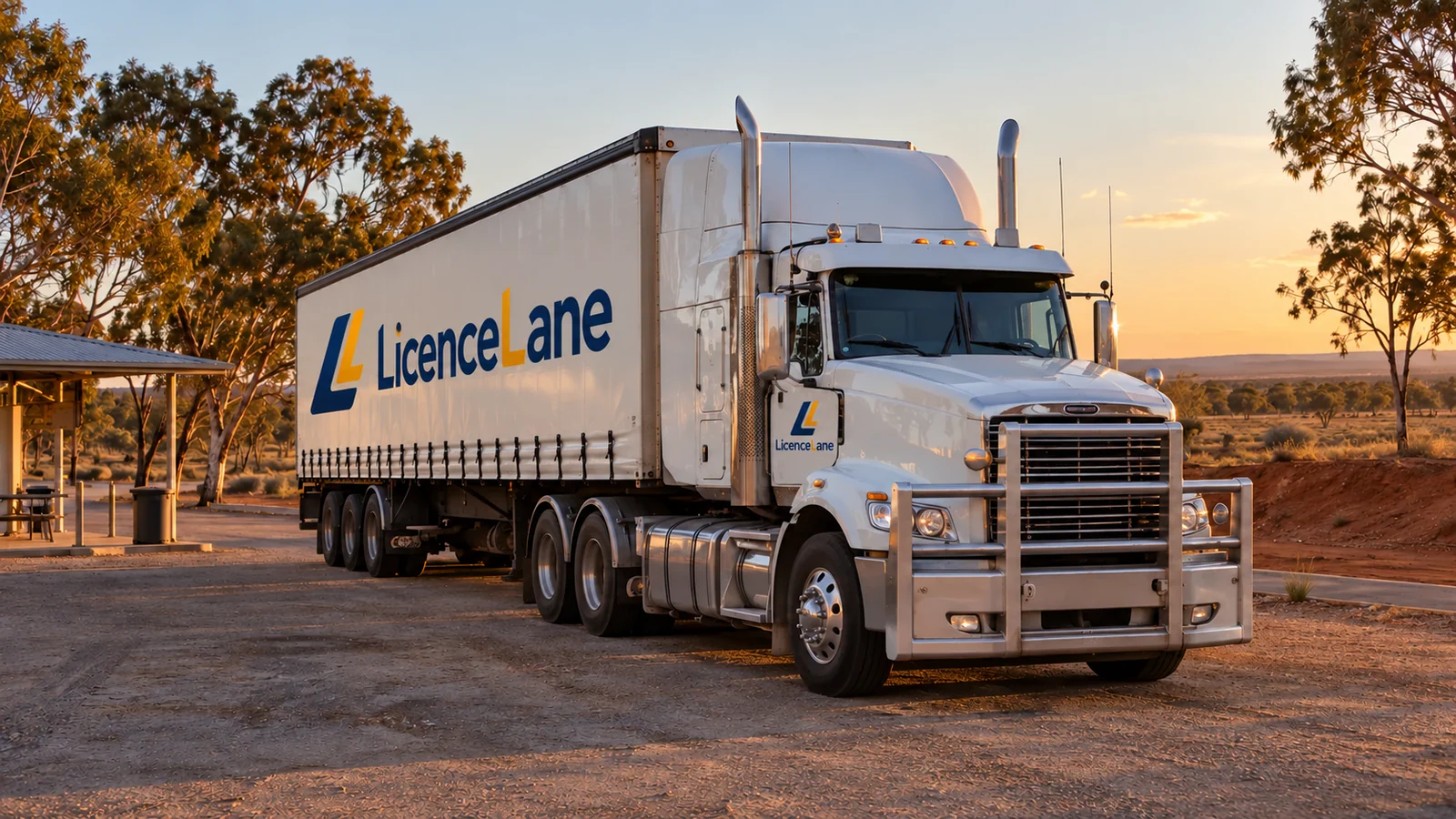
A Queensland heavy combination licence includes HR and the lower vehicle classes. It also authorises a truck over 8t GVM towing a trailer over 9t GVM. This includes qualifying prime-mover and semitrailer combinations, subject to licence conditions and vehicle operating limits.
Identify the combination
Check the towing vehicle's specifications, the trailer's GVM and the complete configuration. HC is not simply a label for any vehicle that bends or tows. Lower classes also allow trailers within their limits, and HR expressly includes articulated buses.
A B-double or road train requires MC. An HC licence does not authorise those combinations merely because the driver has experience towing a semitrailer. LicenceLane does not offer MC training.
Check the limits beyond the class
The correct class does not override vehicle ratings, legal mass and dimension limits, load restraint, road access conditions or any required permit. Check the transmission entitlement too: an automatic or synchromesh condition may restrict which HC vehicles you can drive.
Coupling and uncoupling require training for the particular equipment. Learn the procedure with a qualified trainer and follow the vehicle and coupling manufacturer's instructions. A short online sequence is not an adequate substitute for supervised practice and the required safety checks.
The standard upgrade route
Ordinarily, an applicant must have held MR or HR for at least one year to upgrade to HC. Qualifying time must be within the preceding five years and satisfy TMR's counting rules. Confirm interstate or overseas history before booking.
Queensland also has a limited special-need route for some C or LR licence holders in remote areas who need HC for employment and meet TMR's other criteria. This requires TMR assessment and approval; it is not a general direct-upgrade option.
Check the complete truck and trailer configuration
Start with the towing vehicle's approved specifications, the trailer's GVM and the way the combination is configured. A prime mover with one semitrailer can fit HC, as can a qualifying rigid truck towing a trailer above the HR trailer threshold.
Do not assume that every articulated arrangement is the same. An articulated bus is expressly included in HR, while a B-double or road train requires MC. The number and arrangement of units matter, so identify the actual combination rather than relying on a general description such as articulated vehicle.
Repeat the check when trailers are exchanged or an additional unit is proposed. A licence suitable for yesterday's combination may not authorise today's arrangement. Ask the operator for clear specifications and seek TMR clarification where the legal category is uncertain.
Distinguish rated mass from today's load
A class requirement based on a vehicle or trailer's GVM does not disappear when it is empty. Removing cargo changes the actual load, not the approved rating used to identify the relevant licence category.
Likewise, holding HC does not permit the combination to exceed its ratings or applicable operating limits. The licence entitlement and the legal load are separate checks. Obtain the information needed for the actual vehicle, trailer, load and route before departure.
If you are new to a combination, ask the operator how its operating requirements are explained during induction. Familiarity with another truck or trailer does not establish that the same limits or procedures apply. Raise unclear specifications before accepting the work rather than trying to resolve them while driving.
Confirm the transmission and equipment training
Check the condition applying to your HC entitlement against the actual gearbox. An applicable A condition is automatic-only, while Queensland's B condition permits automatic or synchromesh heavy vehicles within the authorised class. A non-synchromesh combination needs the appropriate entitlement.
Ask the trainer which transmission is used and what licensing outcome is expected from the assessment. If the test vehicle changes, confirm those details again. A package described simply as manual does not identify every relevant transmission distinction.
Coupling equipment and operating procedures also vary. Learn equipment-specific tasks with suitable instruction and supervision, using the manufacturer's requirements and the operator's procedures. A broad licence class is not evidence that you are already familiar with each coupling, control or attachment you may encounter.
Compare employment requirements with your experience
Ask prospective employers which combinations, gearboxes and duties the role involves. Check whether they consider newly licensed drivers and what familiarisation or experience they require. An HC entitlement does not guarantee employment or establish experience operating every combination in the class.
Some work may need dangerous goods licensing, additional equipment training or other authorisations. Requirements depend on the actual goods and operation. A general freight description is not enough to settle which additional credentials are necessary.
Be accurate about your practical background. Distinguish supervised training from independent work and experience with the particular equipment. This helps the employer assess suitable duties and induction, and gives you a clearer basis for choosing any further training.
Choose a course around the assessment you need
Confirm your qualifying licence history and the standard HC route with TMR before paying for a practical-test arrangement. If you believe a special-need provision applies, obtain TMR's assessment instead of assuming that a remote location or a job offer automatically creates eligibility.
Check the centre offers HC testing and the provider can supply a combination meeting TMR's full assessment requirements. General class eligibility is not a substitute for the vehicle specifications required for the test. Ask whether you train and test in the same combination.
Compare individual driving time, warm-up, vehicle access, government fees and any additional charges. Read cancellation and rescheduling conditions before buying. Keep the intended class, transmission and inclusions in writing so the purchased service matches the entitlement and preparation you actually need.
Training and the practical test
Confirm the knowledge-test requirement or exemption, medical fitness, the intended transmission and a suitable test centre. TMR has specific requirements for HC assessment combinations. Meeting the general HC class definition alone is not enough to make a vehicle suitable for the test.
TMR expects 70–80 minutes on the road for an HC test, with extra time for checks and administration. Complete the licence upgrade after passing before driving outside your existing entitlement unsupervised. Read the training and test-day inclusions separately from government fees.
Official sources
Official pages checked on . The authority's page prevails over this guide.
- Queensland licence types classes and conditions (opens in a new tab)
- Queensland licence upgrades and eligibility (opens in a new tab)
- Queensland test vehicle requirements (opens in a new tab)
- Queensland practical driving tests (opens in a new tab)
- Queensland Driver Licensing Regulation 2021 current version (opens in a new tab)
- Queensland dangerous goods driver licensing (opens in a new tab)