
On this page
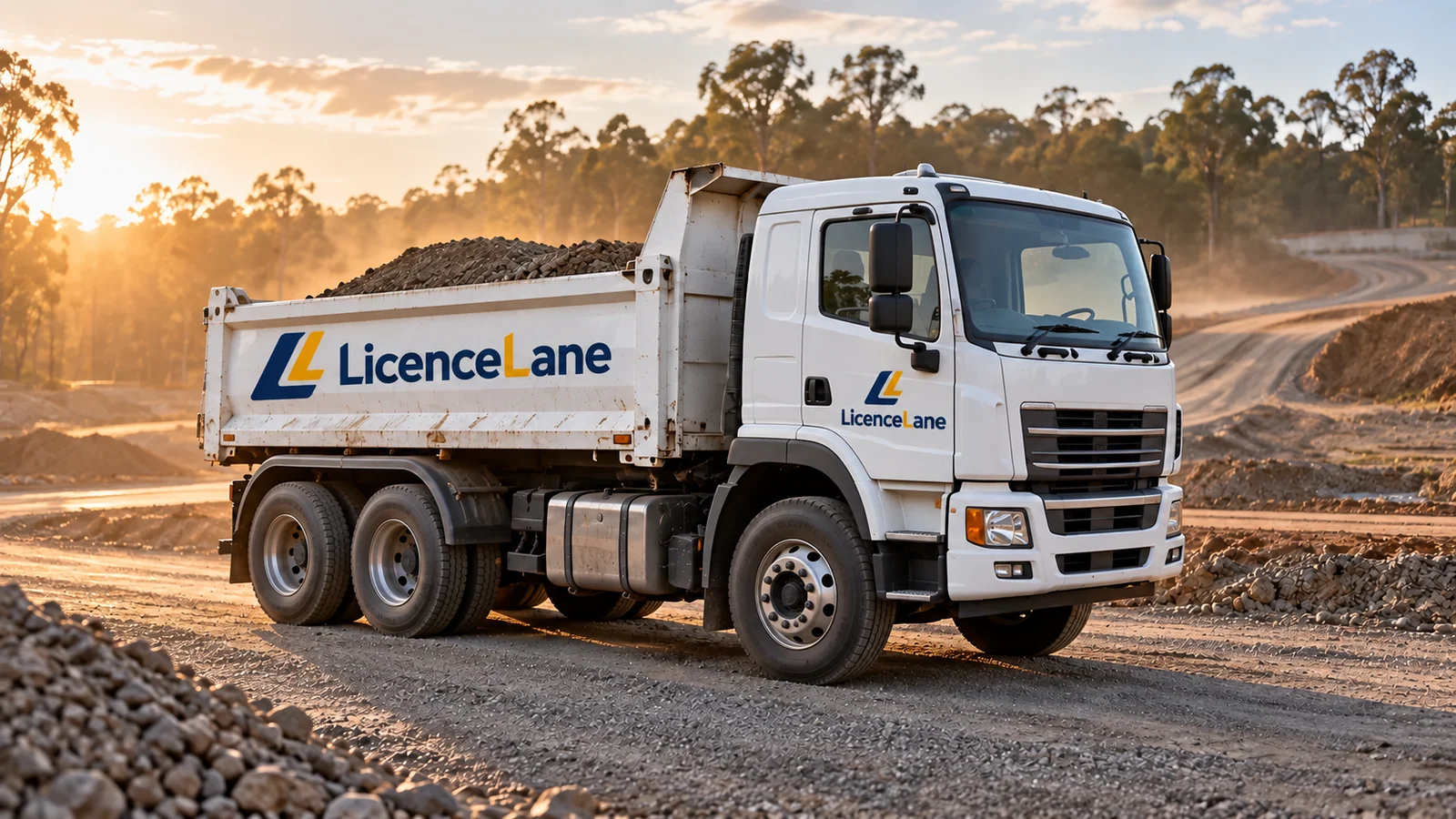
A Queensland heavy rigid licence includes MR, LR and C vehicles. It also covers buses and trucks over 8t GVM with more than two axles, and articulated buses. The conditions on your licence still apply.
Rigid trucks and buses
HR can cover different bodies and uses, including a suitable rigid tipper, delivery truck, refuse truck or bus. These are examples of configurations to check, not a rule that every vehicle doing that work requires HR.
Look at the approved GVM and axle configuration. A lighter vehicle can fall within a lower class, which an HR entitlement also includes. A vehicle's current load does not change its rated GVM or automatically lower the required licence class.
HR has no simple extra permission to exceed mass or dimension limits. The vehicle must still comply with its ratings, legal loading limits and road access requirements. Confirm unusual or modified configurations with TMR.
Articulated buses and trailers
An articulated bus is expressly included in Queensland's HR class. Its joint does not by itself make it an HC vehicle.
HR also allows a trailer with a GVM of up to 9t. Towing is therefore not automatically outside HR. A truck over 8t GVM towing a trailer over 9t GVM falls within HC. B-doubles and road trains require MC. Vehicle and combination ratings may impose lower operating limits than the licence-class threshold.
Check other requirements
An HR licence with a transmission condition does not authorise every HR gearbox. Check the entitlement against the actual truck. Medical conditions and any notices issued with the licence also remain relevant.
Passenger transport and dangerous goods work can require additional authorisations or licences, depending on the operation and any exemption. A driver's heavy vehicle class does not replace those requirements or an employer's task-specific training.
Check the exact vehicle before accepting it
Obtain the approved GVM, axle configuration, vehicle type and transmission from the owner or operator. These details establish more than a photograph or a general description such as heavy truck. Variants of a similar model can have different ratings and configurations.
For example, an ordinary three-axle rigid truck above 8t GVM fits HR. A two-axle truck above 8t fits MR, which is included within HR. Smaller LR and C vehicles can also be within an HR holder's entitlement, subject to the conditions applying to those classes.
If a vehicle has been modified or its documents conflict, resolve the specifications before driving. Removing its load does not reduce its rated GVM or automatically change the required class. A vehicle supplied as a substitute should receive the same check as the one originally arranged.
Understand why an articulated bus is different
Queensland expressly includes articulated buses in the HR class. The presence of a joint is therefore not a reliable shortcut for deciding that a vehicle requires HC. The legal category of the vehicle matters.
Ask the operator about the particular bus, transmission and duties. Passenger transport can require driver authorisation in addition to the correct licence class. The requirement depends on the service and any applicable exemption, so confirm the operation rather than assuming every bus task is identical.
Familiarisation remains necessary when moving between buses or from trucks to passenger vehicles. An HR entitlement does not establish experience with a particular layout, passenger-management procedure or workplace system. Arrange appropriate instruction for the actual vehicle and role.
Assess the whole towing configuration
An HR holder may tow a trailer up to 9t GVM within the licence-class entitlement. However, the towing vehicle, coupling and combination may have lower ratings. The licence limit is not permission to exceed any of them.
A truck above 8t GVM towing a trailer above 9t GVM falls within HC. B-doubles and road trains require MC. Check the complete configuration whenever a trailer is added or exchanged, including its approved rating rather than only its current load.
Do not rely on driving the combination empty as a way around the class requirement. Likewise, a correctly licensed driver still needs to comply with loading, dimensions, access and other operating rules. Ask the operator for the information and training needed before accepting an unfamiliar combination.
Check the transmission before collecting the keys
Identify whether the condition applying to your HR class permits the vehicle's gearbox. An applicable A condition limits that entitlement to automatic vehicles. Queensland's B condition permits automatic and synchromesh heavy vehicles within the authorised class, but not non-synchromesh heavy vehicles.
Do not assume that manual car experience authorises every manual truck. Ask for the actual transmission type, particularly when a vehicle listing uses broad terms such as manual or automated. The intended assessment outcome should be clear before buying training.
If you need a condition changed, complete the required licensing process before driving outside your existing entitlement unsupervised. Once the amended entitlement is issued, still take time to learn the particular truck's controls and operating procedures. Legal permission and vehicle familiarity serve different purposes.
Match the licence to the complete job
A vehicle may carry equipment or be used for work that requires additional training or authorisation. Ask about loading duties, attachments, dangerous goods and passenger services where relevant. The HR class does not remove separate requirements applying to those activities.
Clarify the employer's expectations for vehicle checks, defect reporting and route planning. A licence is not approval to operate an unsafe vehicle or ignore a restriction affecting a particular load or road. Follow the applicable procedures and raise uncertainty before departure.
Use a confirmed job requirement or vehicle specification to select your training. Ask the instructor how the proposed truck and transmission fit that goal, what practical preparation is included and how readiness will be reviewed. A suitable match is more informative than a promise that any HR package will qualify you for every heavy-driving role.
Assessment vehicles have separate rules
An HR training or test vehicle must meet the purpose for which it is being used. TMR sets specific assessment requirements for vehicle size, axles, body construction and other equipment. Those requirements are separate from the general HR licence definition. Read the full test-vehicle specifications before reserving a truck for the assessment.
Before booking, confirm your eligibility, transmission choice and test-day vehicle. Choose from the vehicle you need to operate rather than a general description such as large truck.
Official sources
Official pages checked on . The authority's page prevails over this guide.
- Queensland licence types classes and conditions (opens in a new tab)
- Queensland test vehicle requirements (opens in a new tab)
- Queensland licence upgrades and eligibility (opens in a new tab)
- Queensland passenger transport driver authorisation (opens in a new tab)
- Queensland dangerous goods driver licensing (opens in a new tab)