
On this page
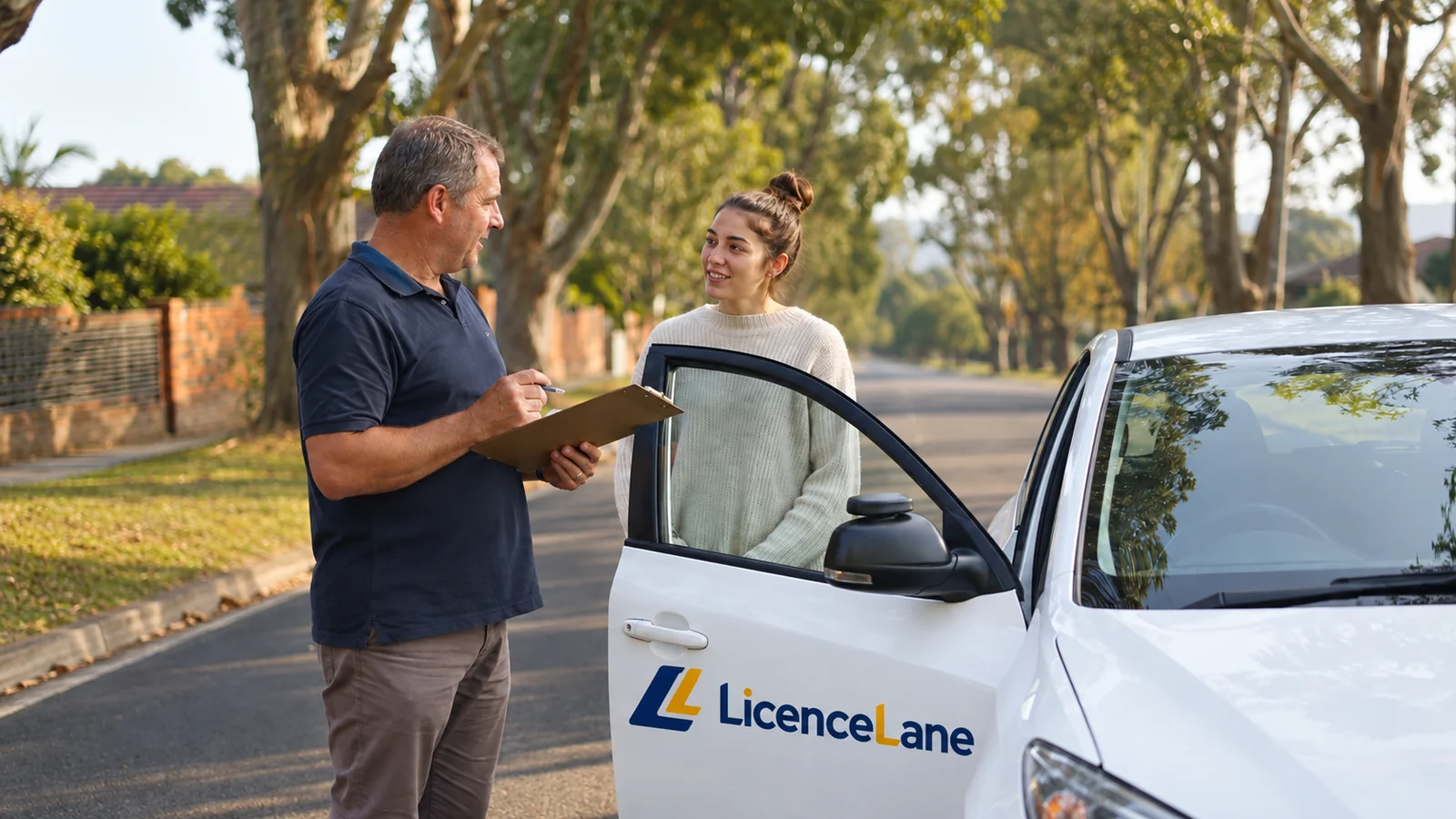
Choose an instructor who is appropriately authorised for the lessons you need, uses a suitable vehicle and explains the service clearly. Teaching style and practical availability matter alongside the price.
Check the local requirements
Ask for the instructor's current licence, accreditation or other authorisation required where the lessons take place. Confirm that it covers your vehicle class and the work being offered. Check working-with-children requirements where they apply, rather than assuming the same card or exemption rules operate across Australia.
In Queensland, TMR recommends checking the trainer's Industry Authority card. Its guidance also addresses blue cards, training-vehicle safety and insurance. Use the local authority's requirements for lessons in another jurisdiction.
Ask about insurance for paid instruction and the planned vehicle use. A profile, a favourable review or a promise of experience does not establish the contents of an insurance policy or the validity of an authorisation.
Ask how the lessons will work
Explain your experience, goals and any communication or accessibility needs. Ask how the instructor will assess your starting skills, structure practice and explain progress. Look for clear, respectful feedback and safe intervention.
An estimated lesson plan should remain open to review as you progress. A package can offer a set number of sessions, but it cannot guarantee that every learner will be ready for the practical test after those sessions.
Check the vehicle and transmission
Confirm whether lessons use automatic or manual transmission and what the local licensing rules mean for your intended test. Restrictions are not identical across Australia.
Ask about dual controls and confirm that the vehicle meets the applicable local instruction requirements. It should be registered, roadworthy and suitable for the agreed lesson. If you intend to use it for the test, check the licensing authority's test-vehicle rules and confirm the owner's permission and test-day availability.
Define what you need from an instructor
Start with your present experience and the reason for booking. A first-time learner may need a structured introduction and regular practice. A licensed driver returning after a long break may want a refresher. Someone preparing for a Queensland test may need feedback on specific skills and a suitable vehicle for the appointment. Explain the situation before purchasing a package so the provider can confirm whether the service fits.
Consider practical details that affect attendance. Check the suburbs covered, pick-up and drop-off arrangements, transmission and available session times. If you need lessons before school or after work, look for actual availability that suits those times. A profile listing your suburb does not establish that a particular appointment is available.
Use the first lesson to assess the teaching
You should understand the purpose of the session and what you are being asked to practise. The instructor should explain unfamiliar tasks, choose conditions appropriate to your ability and give feedback that you can use. Corrections should describe the driving behaviour and how to improve it, rather than leave you guessing what went wrong.
At the end, ask which skills are developing and which need attention. A useful answer might identify late observation at intersections or inconsistent speed on approach to a turn. It should also explain a suitable next step. General reassurance alone gives you little information for planning practice or deciding whether to continue.
If the teaching style is not working, raise a specific concern. You might need shorter explanations, a demonstration while parked or more time repeating one task. An instructor cannot promise an outcome, but should be able to discuss the learning approach respectfully.
Read reviews for relevant detail
Look for comments about communication, punctuality, feedback and the type of lesson delivered. These can help you identify questions to ask. A review from an experienced driver upgrading a licence may be less relevant to a nervous beginner than a description of introductory lessons.
Treat unusually strong promises cautiously. A high rating or a statement that many students passed does not tell you how applicants were selected, how results were counted or what your own preparation requires. Do not assume that a profile's photograph proves current vehicle availability or that a public review verifies insurance cover.
Use reviews as one source of information alongside the instructor's authorisation, service details and your experience of the lesson. If an important detail is missing, ask for a clear answer before you pay.
Check how progress and practice are recorded
Ask whether you will receive a brief record of skills covered and what to practise next. This can help you use paid lessons more effectively, especially when a family member provides most of your supervised driving. With your agreement, sharing practical goals with that supervisor can make the approach more consistent.
A learning record is different from an official learner logbook. Where a logbook is required, record trips accurately using the accepted process and have the supervisor approve them. A package confirmation or receipt is not evidence that all purchased hours have been driven.
If you change instructors, keep your own notes about the skills already covered. The new instructor may still need to assess you before planning further lessons. That assessment is useful because previous lesson numbers alone do not show current driving ability.
Make a careful package decision
A larger prepaid purchase may suit someone who has confirmed the instructor, schedule and service. If you are still choosing, an initial lesson can help you understand the arrangement before committing further. Compare the complete terms as well as any advertised discount.
Check whether a package is tied to a particular class, transmission, area or instructor and when the entitlement expires. Ask how a change of instructor or an unavailable appointment affects the unused balance. Keep the purchase confirmation and the terms applying when you paid.
LicenceLane is a marketplace for comparing and booking independent instructors. Use the service information to make an informed choice and raise any unresolved question through the available contact channel. Selecting an instructor is the beginning of a learning arrangement, so clarity about the lessons and communication matters as much as the initial price.
Compare complete booking terms
Check the lesson length, pick-up area, included driving time, test-day vehicle hire, government fees and total price including compulsory charges. Read cancellation, rescheduling, expiry and unused-package terms before committing.
If you later change instructors, the treatment of unused services depends on the booking terms and any rights under Australian Consumer Law. Do not assume you can transfer or cancel a prepaid package without cost. Consumer guarantees cannot be removed by a no-refund statement.
On LicenceLane, use the current listing to compare the instructor, vehicle, area and service inclusions. Ask for clarification before payment if something important is unclear. Reviews can inform your choice, but neither reviews nor a lesson purchase guarantees a pass.
Official sources
Official pages checked on . The authority's page prevails over this guide.
- Queensland guidance on choosing a driving school (opens in a new tab)
- Queensland driver trainer accreditation requirements (opens in a new tab)
- ACCC repair replacement refund and cancellation rights (opens in a new tab)
- Queensland licence types classes and conditions (opens in a new tab)
- NSW provisional P1 licence restrictions (opens in a new tab)