
On this page
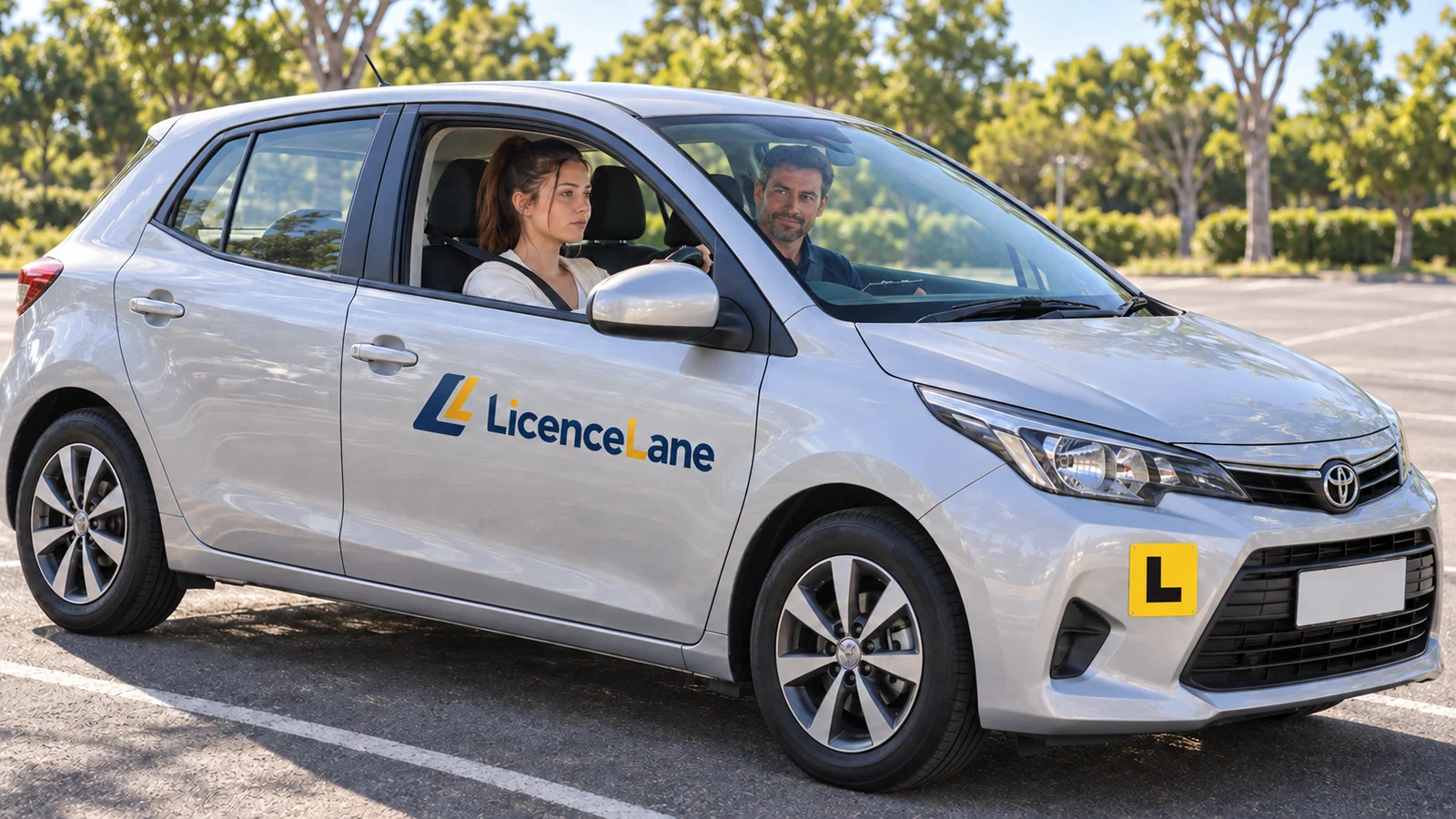
Queensland does not set a fixed number of paid car lessons that every learner must buy. The supervised-driving requirements and your readiness for independent driving are separate from the number of professional lessons you purchase.
Know the logbook requirements
Learners under 25 generally need at least 100 recorded hours of supervised driving, including at least 10 hours at night between sunset and sunrise. The logbook must be approved before the practical test. TMR's test-booking process requires approval before booking where a logbook is required.
Learners aged 25 or over do not have to complete a logbook. This does not remove the usual one-year learner period or required tests. A learner granted a logbook exemption must hold the learner licence for at least two years before the practical test. Other recognised licensing pathways can differ; check with TMR.
Understand instructor credit
The first 10 actual hours with an accredited trainer can attract up to 30 logbook hours under Queensland's triple-time rules. Later instructor hours are recorded in real time.
A night lesson cannot be counted both as triple time and as night hours. TMR allows the learner to choose the eligible triple-time entry as daytime credit, or record the actual time as night driving. Record what actually occurred and have the supervisor approve the entry.
Build a lesson plan around skills
An initial assessment can identify what you already do well and what needs practice. Ask for specific goals covering observation, speed choice, positioning, intersections, lane changes, manoeuvres and hazard response.
The amount of professional tuition needed varies with prior experience, access to suitable supervised practice, the transmission being learned and progress. A package's included hours are a purchase quantity, not a guarantee of readiness or a pass.
Use supervised practice to apply the skills taught in lessons. Introduce more demanding roads and conditions gradually with a suitable supervisor, without taking on conditions beyond your current ability. Keep feedback clear and discuss complicated corrections when safely parked.
Separate actual driving from logbook credit
The triple-time allowance changes the credit recorded, not the time you spend controlling a car. For example, if you use all 10 eligible instructor hours as 30 daytime logbook hours, you would still need another 70 actual supervised hours to reach 100 credited hours, including the required night component. This example assumes all the entries are valid and no other recognised credit or exemption applies.
Those numbers are a minimum-hours calculation, not a recommended stopping point for learning. You may need more driving to become consistent, and some of that practice may be with an instructor. Once the eligible triple-time allowance is used, further instructor tuition can still be valuable even though the logbook records it in real time.
Keep your actual experience in mind when reviewing progress. A larger credited total should not encourage you or your supervisor to move into roads or conditions beyond your current ability.
Begin with an assessment of your skills
Before deciding how many lessons to buy, explain how much driving you have done and where. Experience on familiar residential streets may not include lane changes, busier intersections or manoeuvring in confined spaces. A trainer can use an initial assessment to identify gaps and agree on priorities.
Ask for a plan stated in driving tasks. For instance, you may need to develop earlier observation, more consistent approach speed or better awareness while reversing. This makes later progress easier to review than a general promise that a certain number of lessons will be enough.
Review the plan after you have practised. Some skills improve quickly with regular repetition; others need a different explanation or more supervised experience. Adjust the next lessons to what the assessment shows, rather than continuing the same route because it feels familiar.
Coordinate professional lessons and home practice
If you have access to a suitable vehicle and lawful supervisor, discuss what to practise between professional sessions. Ask the instructor to describe the exercise, appropriate conditions and signs that you are ready to progress. Complicated feedback is best discussed when safely parked rather than delivered as a continuous conversation in demanding traffic.
Keep a short note after each session. Record the roads or conditions experienced, the task practised and one or two points to revisit. This is a personal learning aid; it does not replace the official details required for a logbook entry.
If you do not have reliable access to a supervisor or vehicle, tell the instructor before choosing a package. Your paid lessons may need to cover a wider range of practice. Ask about a workable schedule and complete costs without assuming that professional tuition must follow one fixed number of hours.
Recognise readiness rather than counting lessons
A learner who performs well only after repeated reminders may need more practice before a test. Look for consistent observation, lawful decisions and safe control across different suitable roads. One good lesson is encouraging, but the purpose is to apply the skills when the route and traffic are less familiar.
Ask your instructor how they assess independent performance and what remains inconsistent. A practice assessment can provide useful feedback, but its result is not a government test result or a guarantee of passing. Keep working on any skill where prompting or intervention remains necessary.
Confidence and competence should be considered together. Feeling nervous does not automatically mean you lack the skills, while feeling comfortable does not establish that the driving is safe. Use specific observations to decide what to practise next.
Budget for learning and the test separately
When comparing lesson options, check the duration, transmission, total compulsory price and what the package includes. A test-day service may include vehicle use or a warm-up lesson, but the government fee is separate unless expressly included. Do not assume every prepaid hour can be redeemed for every service.
Choose a quantity that suits your plan, availability and the package expiry conditions. If progress changes, review the next purchase rather than treating the original estimate as a promise. The best answer to how many lessons you need is a current assessment supported by practice, together with completion of Queensland's licensing requirements.
Plan for approval and testing
TMR asks learners to submit the logbook at least 12 business days before the intended test; processing or corrections can take longer. Pass the required hazard perception test and confirm your eligibility before booking.
Choose a practical-test date when you can drive safely and consistently without prompts. Meeting the minimum hours is a legal milestone, but it is not proof that every driving skill is ready for independent use.
Official sources
Official pages checked on . The authority's page prevails over this guide.
- Queensland learner logbook requirements (opens in a new tab)
- Queensland guidance on choosing a driving school (opens in a new tab)
- Queensland learner to provisional licence steps (opens in a new tab)
- Queensland car hazard perception test (opens in a new tab)
- Queensland Driver Licensing Regulation 2021 current version (opens in a new tab)
- Queensland learner logbook app guidance (opens in a new tab)