
On this page
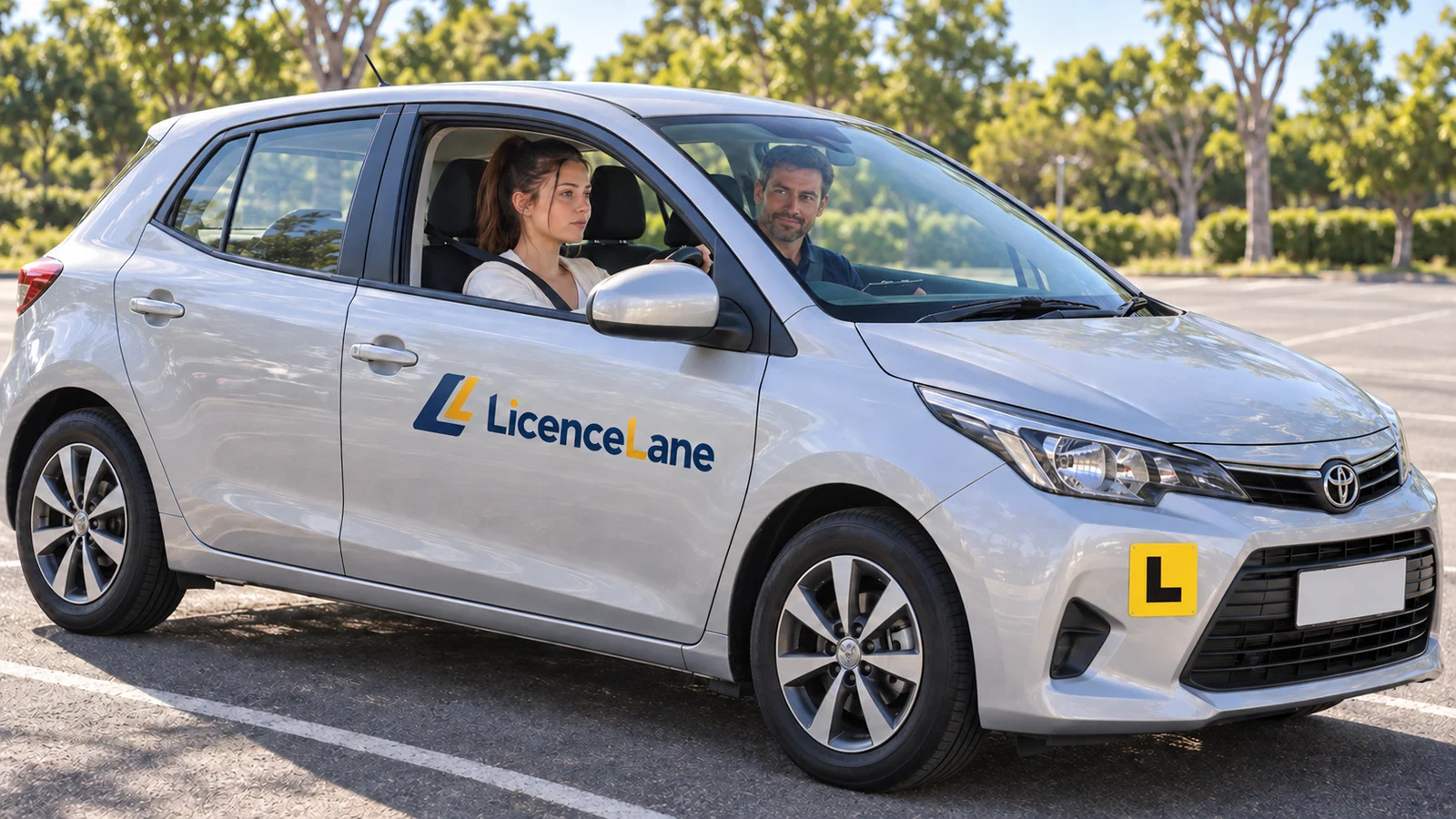
Prepare for a Queensland car driving test by checking your eligibility and practising safe driving across the situations you are likely to meet. Memorising a route does not replace the skills being assessed.
Confirm eligibility before booking
For the ordinary learner-to-provisional pathway, you must be at least 17 and have held the learner licence for the required one-year period. Under-25 learners generally need an approved logbook with 100 supervised hours, including 10 at night. Learners aged 25 or over do not need a logbook, but the ordinary learner-tenure requirement still applies. A granted logbook exemption requires at least two years on the learner licence before the test. Other licence pathways can differ.
Car learners must pass the hazard perception test before booking the practical test. The usual earliest point to take it is after holding the learner licence for six months. Allow time for logbook approval and any medical or identity requirements.
Practise the assessed skills
Work on observation, speed management, lane position, safe gap selection, giving way, turning, lane changes and manoeuvres. Ask your instructor for feedback about skills you cannot yet perform consistently without prompts.
Do not rush into a gap because another driver is waiting. Follow signs and markings, recheck traffic before moving and stop when necessary to give way. If an instruction is unclear, ask for clarification when safe; never make an unsafe movement just to follow a direction.
Arrange a suitable vehicle
Use a registered, roadworthy vehicle that meets TMR's test specifications and has the registered operator's permission. Check lights, tyres, mirrors, seatbelts, controls, windscreen and required L plates. Read the full official requirements, including rules affecting recalls and vehicle suitability.
If you plan to use an instructor's vehicle, confirm the centre, time, transmission and test-day inclusions. The government appointment and a LicenceLane service are separate bookings.
Check readiness across more than one familiar route
A useful preparation plan includes different suitable roads and traffic situations. You should be able to apply observation, speed choice and giving-way rules when the next turn is unfamiliar. Repeating one route can make the directions easier to remember without showing whether the underlying driving skills are consistent.
Ask your instructor which tasks still require prompting. Practise them with lawful supervision and review the result. A mock assessment may help you identify what to work on, but it does not reserve an official test result or predict every situation you will encounter.
Do not book only because you have reached the required age or hours. Those are eligibility requirements. Readiness also involves making safe decisions without depending on your supervisor to identify each hazard or tell you when to act.
Practise using the vehicle you intend to take
If possible, prepare in the vehicle booked for the test. Locate the controls, adjust the driving position and understand the vehicle's dimensions. If the test vehicle changes, arrange time to become familiar with it rather than assuming all cars respond identically.
Driver-assistance technology does not replace the assessed skills. TMR requires you to demonstrate safe driving without relying on these features. When reversing, for example, use appropriate physical observation and mirrors as well as any camera. A clear screen image does not establish that the entire area around the vehicle is safe.
Ask the registered operator about any known defect or recall issue well before the appointment. A last-minute vehicle problem may prevent the test and affect the government booking fee. The full official vehicle checklist is more reliable than a brief list in a lesson advertisement.
Create a test-day plan that allows for delays
Write down the government centre, appointment time and the separate arrangements for meeting your instructor. Check which address is the test location and which is only a pick-up point. Allow travel time for the time of day, parking and the required early arrival.
Gather the documents the day before. If you use a digital licence, ensure the device is available and charged for identification, then follow TMR's direction to turn off the phone for the test. If your circumstances require additional identity evidence or a medical certificate, a lesson confirmation will not replace it.
Plan your return journey as well. You may still need a supervisor if you do not pass, and a pass must be followed by licence issue before independent driving. Confirm any vehicle restrictions that would affect who can drive away from the centre.
Respond to instructions without rushing
Listen to the examiner's explanation before the drive and ask about anything you do not understand. During the test, keep your attention on safe driving. If you cannot safely make a requested movement, do not force it or breach a road rule to preserve the route.
Continue driving safely after an error instead of trying to calculate your result. An attempt to compensate by rushing can create a further problem. The examiner assesses the drive under the official criteria and explains the outcome afterwards.
If nerves are affecting your concentration, discuss preparation strategies with your instructor beforehand. Practise receiving directions without continuous coaching and use a familiar preparation routine. Avoid trying a new medication or any substance to manage nerves without appropriate medical advice about driving safety.
Confirm what your test-day service includes
Ask whether your private booking covers the warm-up, travel to the centre, vehicle use throughout the appointment, waiting time and return arrangements. The expected time on the road is only part of the appointment. A package name alone does not establish how long the vehicle is reserved.
Keep the total price and the applicable cancellation and rescheduling terms with the confirmation. Government rules and private service terms can have different deadlines. If the appointment changes, contact both providers promptly and check whether replacement availability is confirmed.
After the assessment, use the feedback to decide the next step. If you pass, complete the licence process. If you do not, confirm the applicable waiting period and practise the identified skills before another attempt.
On the day
- Arrive at least 20 minutes before the appointment.
- Bring your current licence and any identity documents TMR requires.
- Bring a current medical certificate if required for your circumstances.
- Allow time for vehicle checks, the drive and feedback.
TMR gives an expected on-road duration of 25–35 minutes for a car test. This is not the full appointment length. The assessment result depends on your driving under TMR's criteria; a small error does not justify guessing the result while still driving.
After passing, complete the licence issue process and display the correct P plates before driving independently. If you need to change the test, check the deadline attached to your TMR booking and change any private lesson or vehicle booking separately.
Official sources
Official pages checked on . The authority's page prevails over this guide.
- Queensland learner to provisional licence steps (opens in a new tab)
- Queensland car hazard perception test (opens in a new tab)
- Queensland learner logbook requirements (opens in a new tab)
- Queensland practical driving tests (opens in a new tab)
- Queensland test vehicle requirements (opens in a new tab)
- Queensland Driver Licensing Regulation 2021 current version (opens in a new tab)